Trust Quotes for Relationships: 30 Lines for Building, Keeping, and Repairing Trust
Trust quotes for relationships give words to the quiet work most couples never name: showing up, telling the truth, and staying steady on ordinary days. A partner who kept a hard promise, a friend restarting after a fight, and a reader setting a boundary in a new relationship all need different lines, and a single long list serves none of them well. This page collects 30 trust quotes for relationships, grouped by the moment a reader plans to use one: short lines, lines about building trust slowly, lines about honesty, and honest lines about repair. Ten lines carry matched card images with a short note on what each line does well. Fifteen lines sit in plain lists for fast copying into a text, a note, or a caption. Five lines sit in a situation table for a promise kept, an apology, a new relationship, a loyalty caption, and a boundary line. Trust here means a practice, never a pressure tactic. No line on this page asks a partner to feel trust before the evidence exists. Readers who want the wider collection can start from the Love hub and return here on the day a promise, an apology, or a fresh start needs the right sentence.
Trust Quotes by Situation
Most readers arrive with one moment already fixed. A promise kept deserves a line that names the keeping, an apology needs words that admit the fact without dressing it up, and a boundary line must stay firm without sounding cold. Five rows below cover the moments readers name most often, and each row pairs one situation with one line and one author, so scanning takes under a minute. Picking by situation avoids the usual mistake: a grand loyalty line where a plain apology is owed, or a deep repair quote where a simple thank you belongs. A new relationship needs patience more than poetry. Ashe’s earned trust line tells the truth about pace, while Sevareid’s error line leaves room for the other person’s humanity. An apology works only when the words admit the fact, and Nietzsche’s upset line does that work in one sentence. A loyalty caption suits anniversaries and ordinary Tuesdays alike. Read only the row that fits your moment, copy the line exactly with its author credit kept, and add one sentence of your own naming the real detail: the promise, the apology, or the boundary that belongs to your week.
| Situation | Line to send | Author |
|---|---|---|
| For a promise kept | “Trust is built with consistency.” | Lincoln Chafee |
| For an apology message | “I’m not upset that you lied to me, I’m upset that from now on I can’t believe you.” | Friedrich Nietzsche |
| For a line for a new relationship | “Better to trust the man who is frequently in error than the one who is never in doubt.” | Eric Sevareid |
| For a caption about loyalty | “Love cannot live where there is no trust.” | Edith Hamilton |
| For a boundary line (trust is earned) | “Trust has to be earned, and should come only after the passage of time.” | Arthur Ashe |
Short Trust Quotes
Short lines carry the whole idea in one breath, which is why readers send them most. A morning text, a caption under an anniversary photo, and a card slipped into a gift bag all have room for one sentence, not an essay. MacDonald opens the card group with the page’s hero line: being trusted outranks being loved, a claim that reframes trust as the deeper compliment. Hemingway follows with the finding out line, and it needs careful reading. The decision belongs to the person choosing to trust, never to someone demanding trust as proof of love. Read as advice for the chooser, the line is brave. Read as pressure from a partner, it becomes a warning sign, and this page keeps the first reading. Shakespeare closes the card group with a three part rule from All’s Well That Ends Well: love all, trust a few, do wrong to none. That old sentence still fits dating apps and office romances, because the middle clause sets a pace most new couples skip. Keep the author credit attached when you share a short line. Credit takes two seconds to type and tells the reader the line was chosen with care, not copied from a bulk list. Send one line, then follow it with your own plain sentence about the week you two actually lived.
“To be trusted is a greater compliment than being loved.”
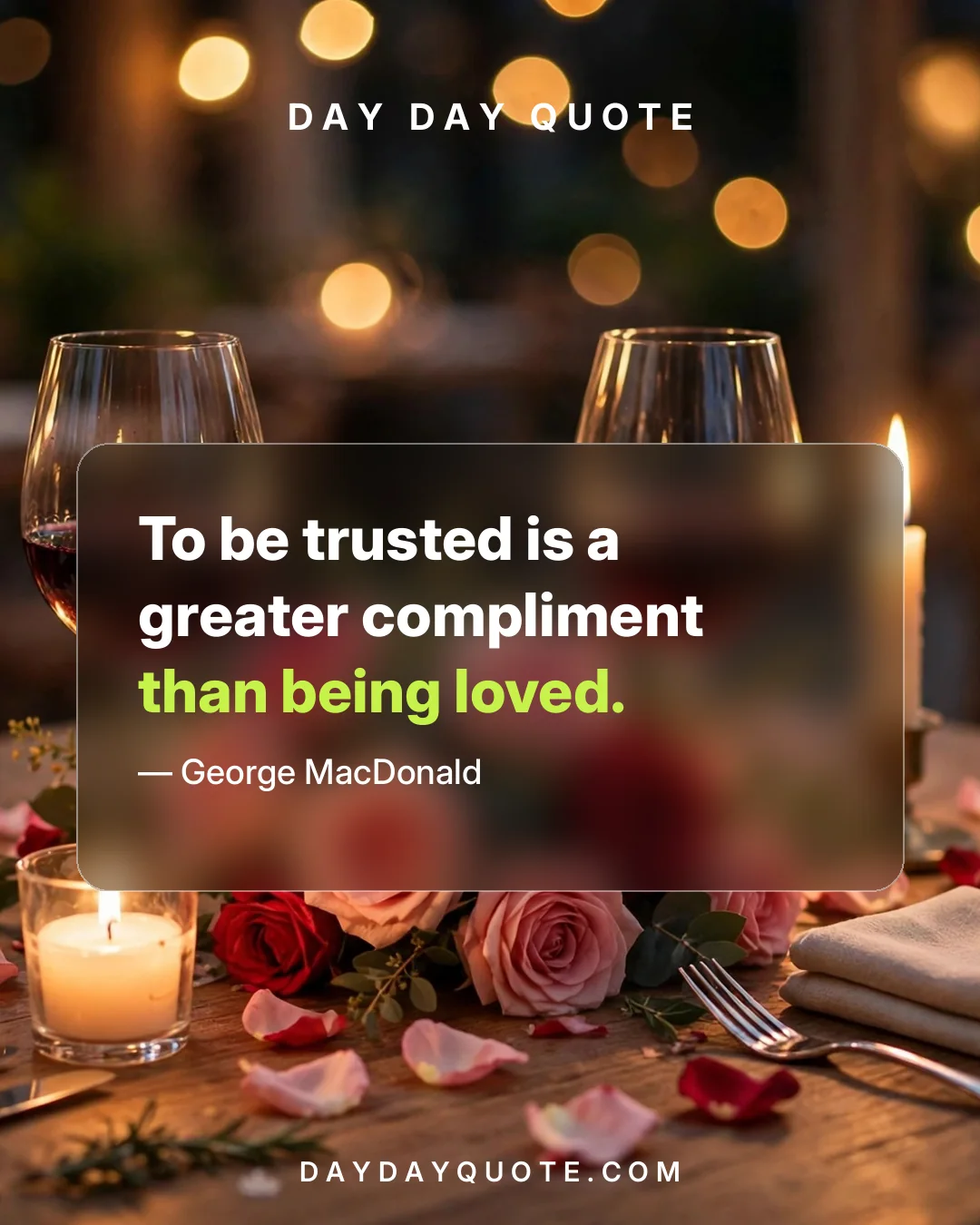
MacDonald ranks trust above love, which surprises first time readers and then lands. The line suits a thank you text to a partner who kept a confidence, because the compliment points at character rather than at romance. Keep it in its true reading: praise for trustworthiness, never a demand for it.
“The best way to find out if you can trust somebody is to trust them.”
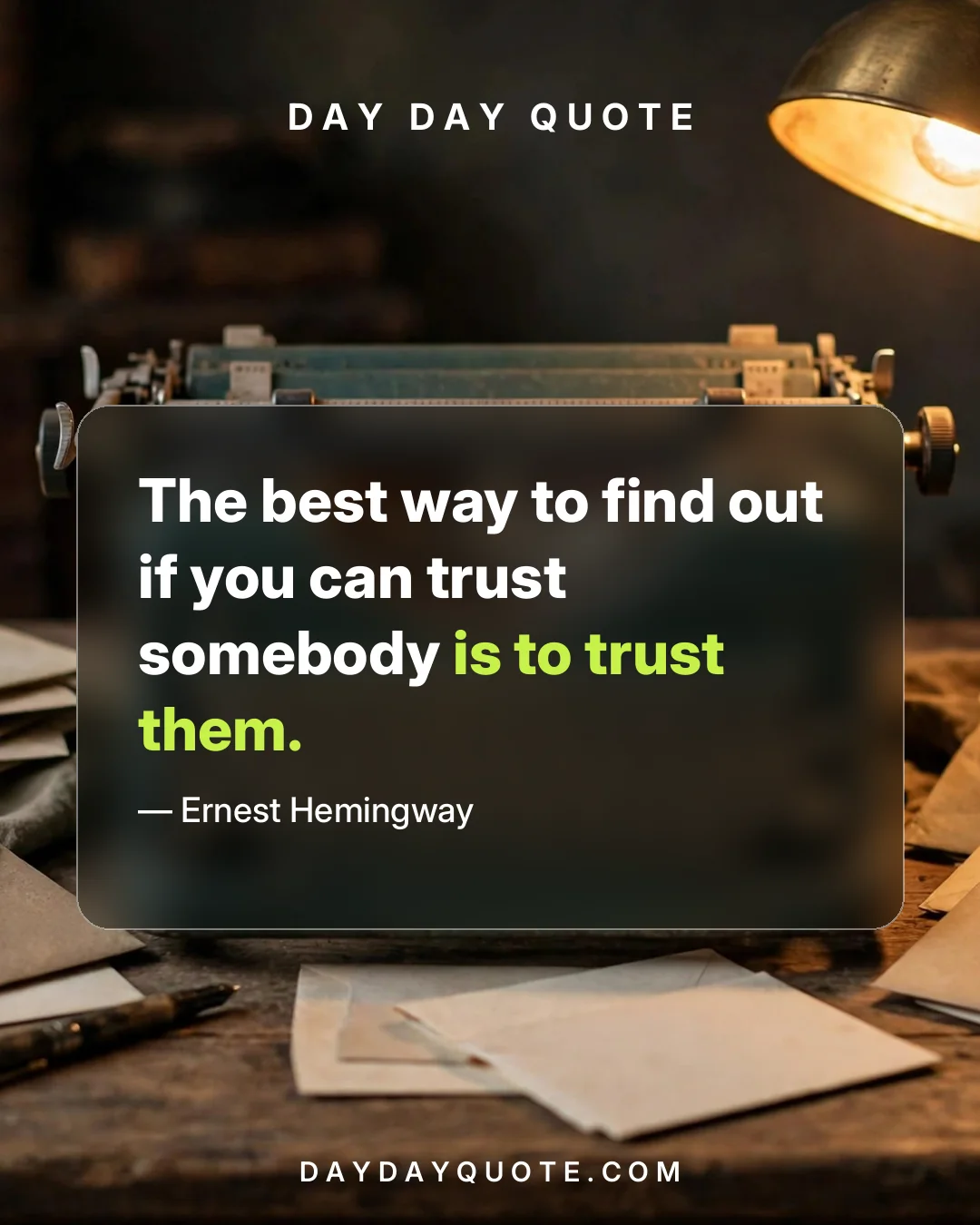
Hemingway hands the choice to the reader, not to the partner. The line suits a personal journal entry or a quiet decision, since the sentence describes one person’s experiment, not a rule for two. Never use it to press a reluctant partner: pressure reverses the very trust the line admires.
“Love all, trust a few, do wrong to none.”

Shakespeare gives a three beat rule that reads like a boundary: love broadly, trust narrowly, harm never. The line suits a new relationship caption or a friendship talk about pacing. The middle clause is the whole lesson, since most people get the first and third right and rush the second.
Four more short lines, as plain lines:
- “The best proof of love is trust.” – Joyce Brothers
- “Trusting is hard. Knowing who to trust, even harder.” – Maria V. Snyder
- “It’s a delight to trust somebody so completely.” – Jeff Goldblum
- “Relationships should be built on trust and truth.” – Sophie Kinsella
Trust Quotes About Building Trust Slowly
Trust grows the way plants grow: slowly, visibly, and only under consistent care. Readers who want a stronger bond usually ask for a grand gesture, but the evidence points the other way: small promises kept, messages answered, plans honored, week after week. Covey opens the card group with the glue line, naming trust as the ingredient inside effective communication, not a decoration on top of it. The Unknown line on card 5 states the math plainly: years to build, seconds to break, forever to repair. Plank closes the group with the drops and buckets picture from his years leading Under Armour: each kept promise adds a drop, and one careless act tips the whole bucket. Build with daily evidence, not with speeches. Text when you said you would text. Arrive when you said you would arrive. Admit the small miss before it becomes a pattern, since confession while small stays repairable. Notice the pattern across all three cards. Trust is built by the keeper’s actions, observed over time, and no line here asks a partner to feel trust before the evidence exists. That order, evidence first and feeling after, is the entire method of this section.
“Trust is the glue of life. It’s the most essential ingredient in effective communication. It’s the foundational principle that holds all relationships.”
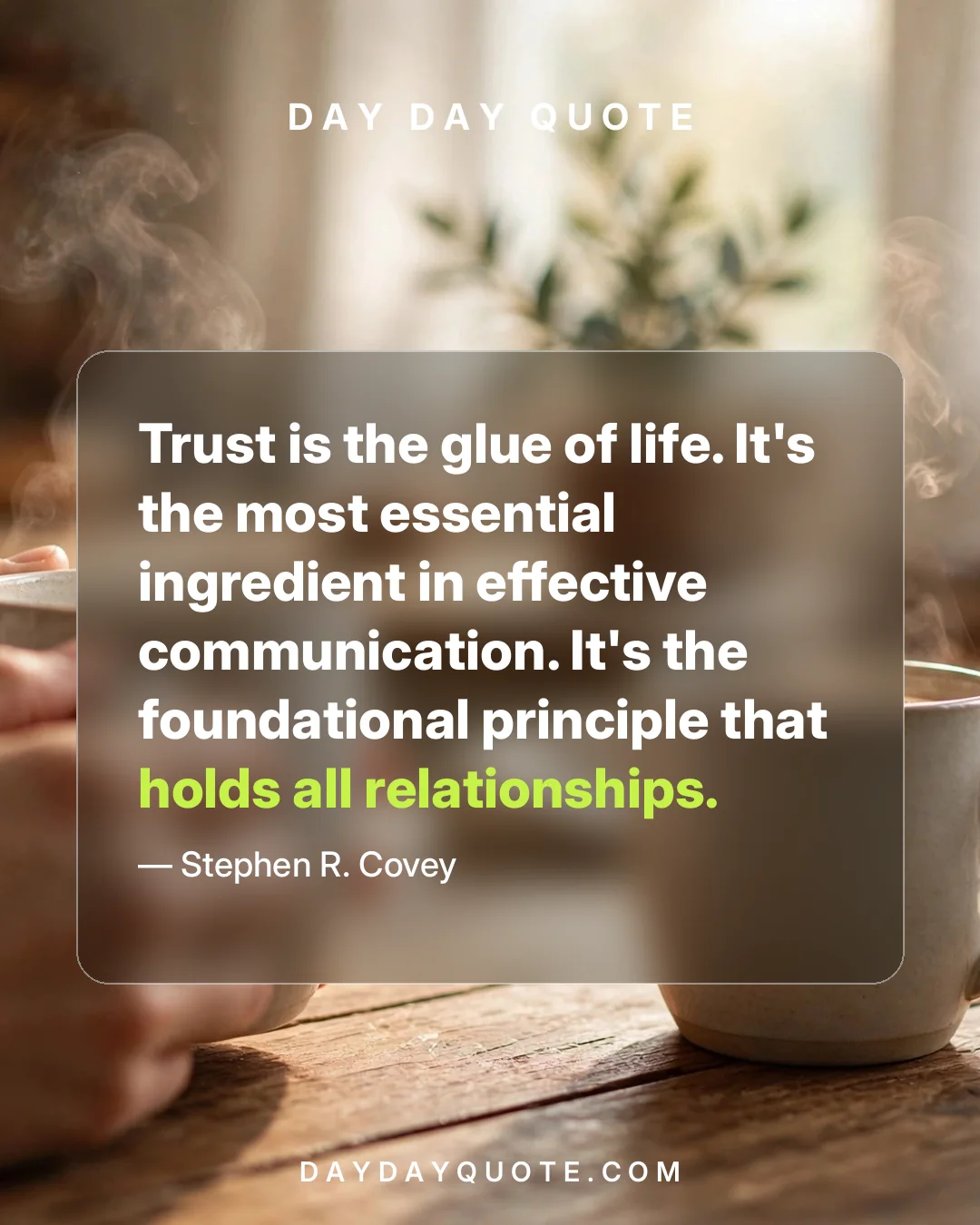
Covey names trust as the glue inside communication, not the wrapping around it. The line suits an anniversary note or a quiet conversation about why small honesty matters daily. Use it to praise a pattern, such as a year of kept promises, rather than to decorate a single grand gesture.
“Trust takes years to build, seconds to break, and forever to repair.”
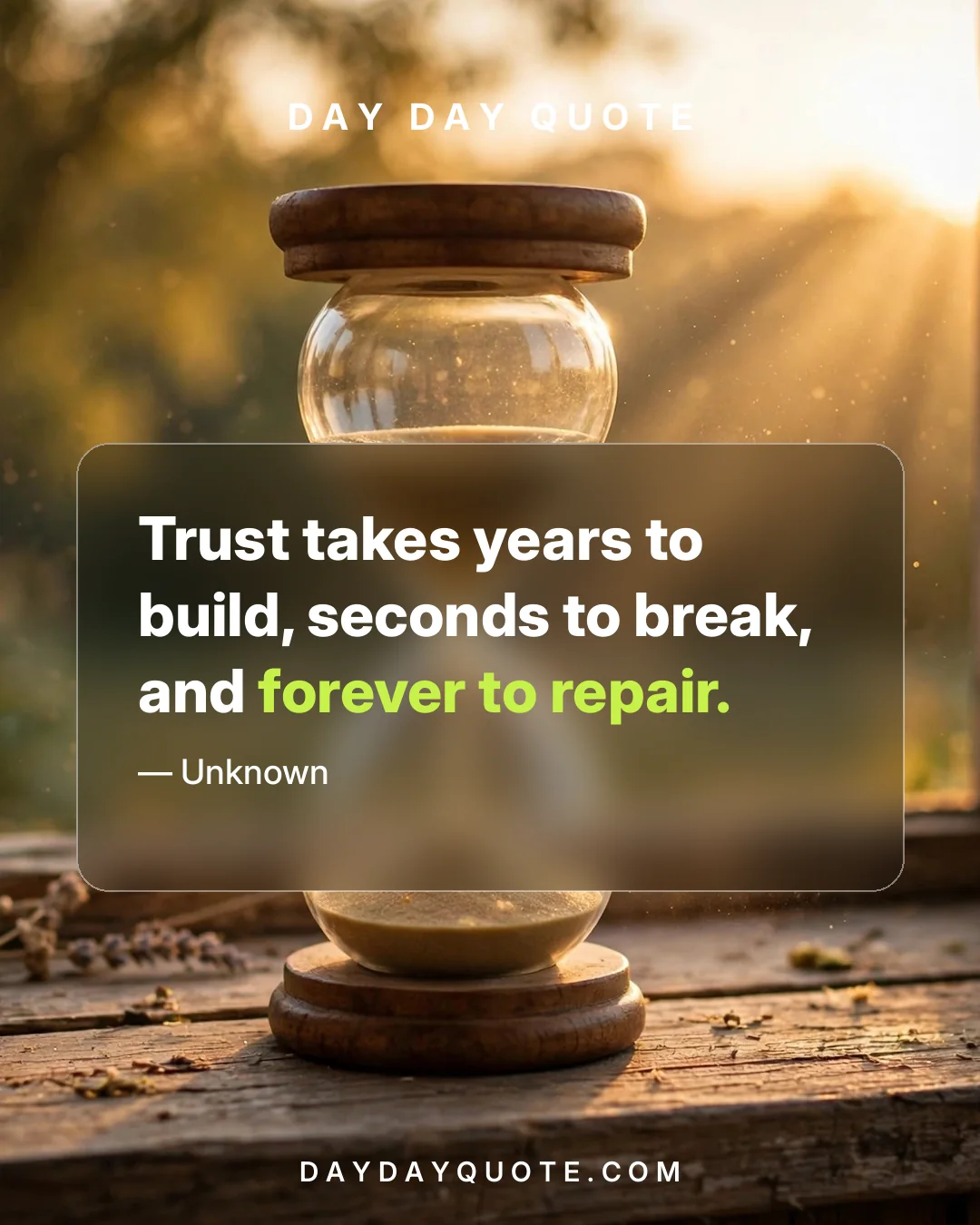
The Unknown line states the asymmetry everyone has felt: building takes years, breaking takes seconds, repair takes longer than either. The line suits a reader setting expectations in a new relationship, since the sentence explains slow pacing without blaming anyone. Its value is descriptive, not punitive.
“Trust is built in drops and lost in buckets.”
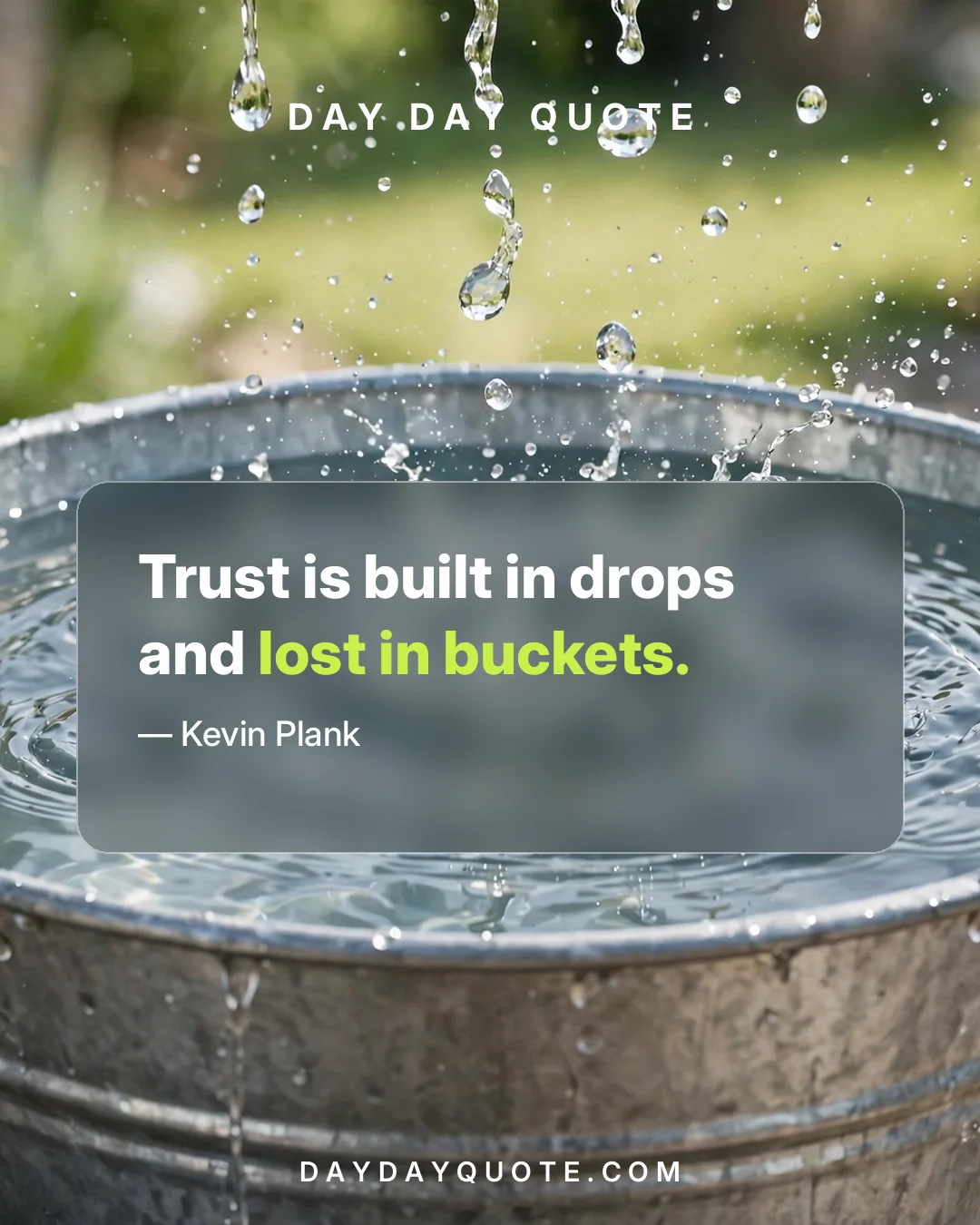
Plank coined the line for business, and relationships run the same ledger: drops in, buckets out. The line suits a couple talk about consistency, because the picture makes small effort visible. Keep the business origin in mind; the mechanism, steady small deposits, fits any bond.
Four more on building trust slowly, as plain lines:
- “You build trust with others each time you choose integrity over image, truth over convenience, or honor over personal gain.” – John C. Maxwell
- “The people when rightly and fully trusted will return the trust.” – Abraham Lincoln
- “When the trust is high, communication is easy, instant, and effective.” – Stephen Covey
- “It is more shameful to distrust our friends than to be deceived by them.” – Confucius
Honesty and Trust
Honesty is trust’s raw material, and the lines in this group say why. Einstein opens the card group with the small matters test: carelessness with little truths disqualifies a person from big ones. Readers often invert the test, forgiving small lies as harmless, but the quote argues the opposite. The small lie is the audition for the big lie. Bennett follows on card 8 with the consistency rule: keep your promises or stop making them. The sentence reads like a contract clause, and couples who adopt it usually report calmer arguments, since the rule removes the gray zone where most fights start. The Russian proverb closes the group with two words after the comma: trust, but verify. Reagan popularized the saying in arms talks, and the pairing still fits relationships: trust is the choice, verification is the hygiene. Verification here means normal openness, shared calendars, answered questions, not surveillance. A partner who resents every question may be asking for blind trust, and blind trust is not the subject of this page. Practice honesty at low stakes first. Tell the truth about the small lateness, the small spending, the small annoyance, before any big test arrives. Trust built on small truth survives the day a big truth is required.
“Whoever is careless with the truth in small matters cannot be trusted with important matters.”
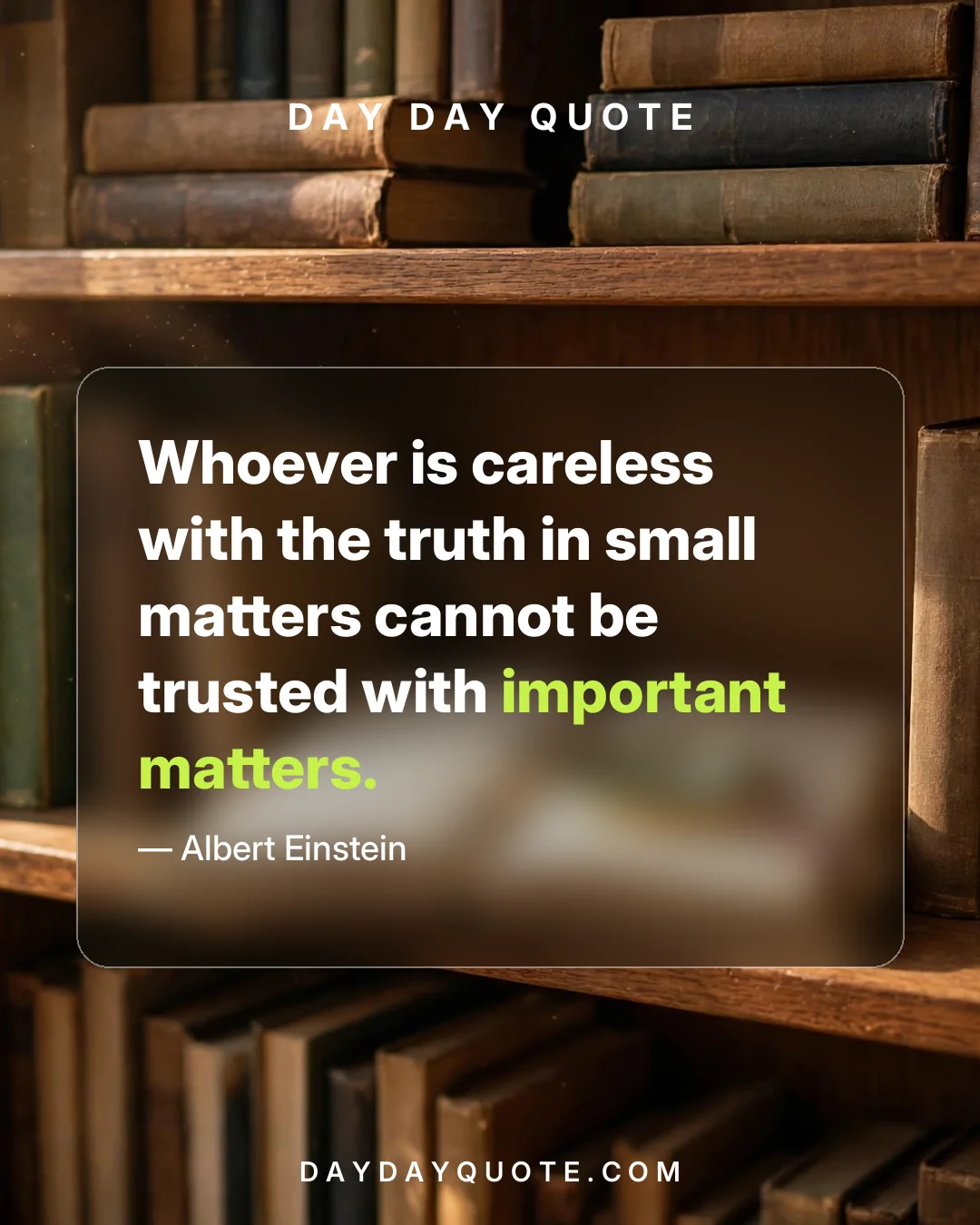
Einstein tests trustworthiness on small evidence, which readers can check today rather than guessing about tomorrow. The line suits a conversation about honesty standards early in a relationship. Apply the test to yourself first, since self checking is the credible way to raise the subject.
“Consistency is the true foundation of trust. Either keep your promises or do not make them.”
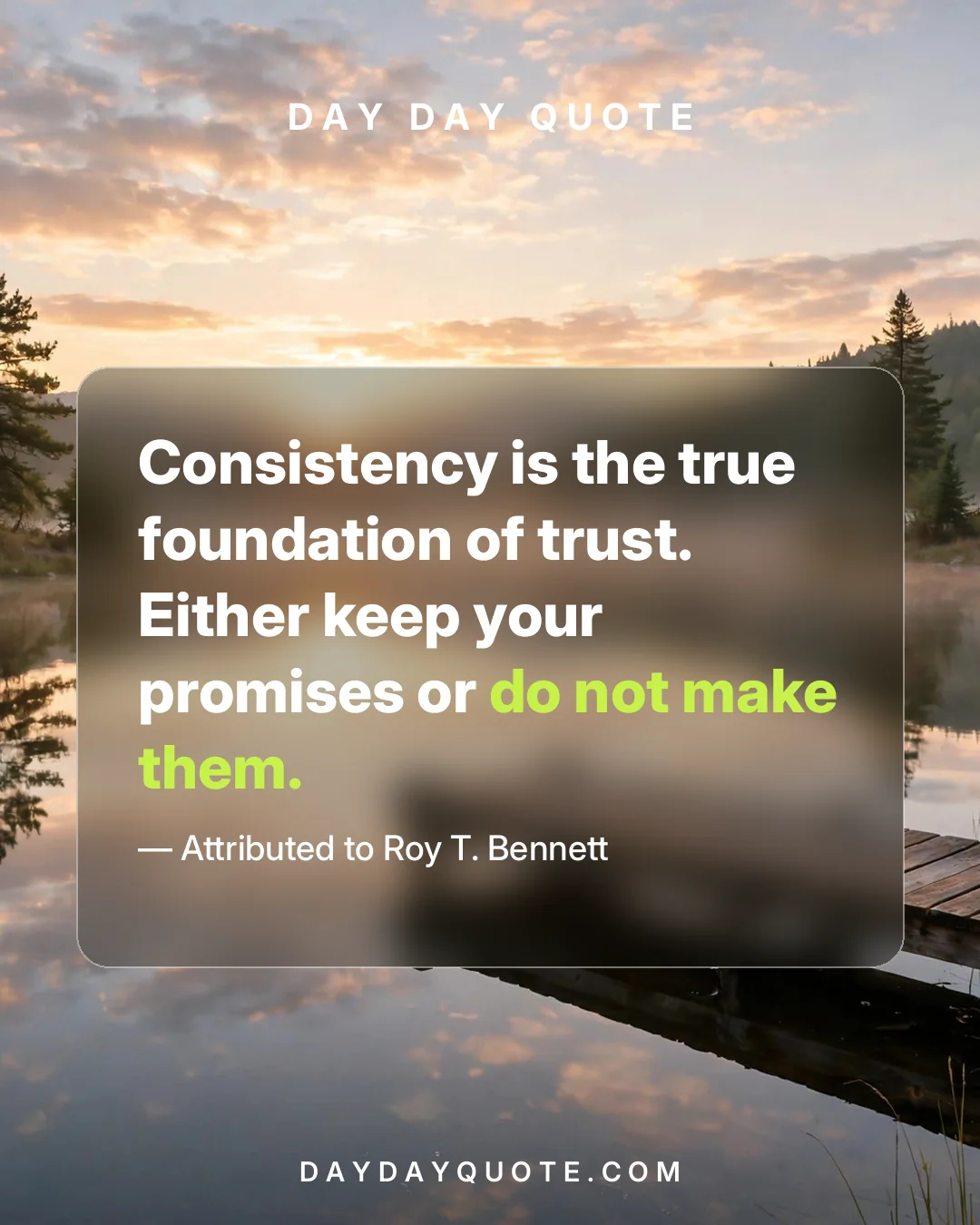
Bennett turns consistency into a promise policy: make fewer promises and keep all of them. The line suits a reader rebuilding reliability after missed commitments. The sentence works as a personal rule posted where only the keeper sees it, which is where rules change behavior.
“Trust, but verify.”

The proverb pairs warmth with sense: trust given, checks kept. The line suits couples who share plans and passwords openly, because the sentence treats openness as normal maintenance. Never use the line to justify snooping; verification means asked and answered, not searched in secret.
Four more on honesty and trust, as plain lines:
- “Trust starts with truth and ends with truth.” – Santosh Kalwar
- “If we do not trust one another, we are already defeated.” – Alison Croggon
- “Without trust, words become the hollow sound of a wooden gong. With trust, words become life itself.” – John Harold
- “For there to be betrayal, there would have to have been trust first.” – Suzanne Collins
Rebuilding Trust After It Breaks
Broken trust asks two questions, and the order matters. First, does the hurt person want to rebuild? Second, does the person who broke it accept the long work? This page answers neither question on the reader’s behalf, because rebuilding is a choice, not an obligation, and a reader who walks away owes no apology for that choice. Some couples do rebuild, and the work has a shape worth describing. Buffett opens the card group with the reputation math: twenty years to build, five minutes to ruin. The sentence explains why repair feels slow, and the slowness is a property of trust itself, not a punishment. Gaga’s mirror line follows with a hard truth: a fixed mirror still shows the crack. The couple that heals does not return to the old innocence; it builds a different, more deliberate trust. Angelou’s courage line speaks to the person considering a second chance, honoring the decision as brave rather than owed. Paul’s conflict line closes the list with the one condition experience supports: repair works only inside honest conversation about what happened, not inside silence or performance. Practical steps follow the same logic. Name what happened in plain words, once, without minimizing. Accept the consequences, including the consequence that trust may never fully return. Then produce a long record of small kept promises, since only evidence rewrites belief. A counselor earns a seat at the table faster than pride admits, when the hurt runs deep. And if you choose to leave, these lines still apply: the next relationship deserves a person who knows trust is built in drops.
“It takes 20 years to build a reputation and five minutes to ruin it.”

Buffett wrote the line about reputation, and couples borrow it for the same arithmetic: building takes years, ruin takes minutes. The line suits the early weeks of repair, because the sentence sets a realistic pace. Read it as an explanation, never as a sentence of doom: slow rebuilding is still rebuilding.
Three more on rebuilding trust, as plain lines:
- “Trust is like a mirror, you can fix it if it’s broken, but you can still see the crack in that reflection.” – Lady Gaga
- “Have enough courage to trust love one more time and always one more time.” – Maya Angelou
- “When trust is broken, it does not need to be the end of a relationship. Much can be learned from staying in a relationship and learning from the conflict situation.” – Dr. Margaret Paul
How to Use These Trust Quotes
Give a borrowed line one job and one moment. A reader who saves thirty lines and sends none owns a folder, not a gesture, so match the line to a live week. MacDonald’s compliment fits the day a partner kept your confidence. Chafee’s consistency line fits a promise anniversary. Ashe’s earned trust line fits a new relationship’s first serious talk, and the boundary reads kinder when it arrives with a calm tone and a specific example. Attach the line to a channel you already use well. A steady texter sends the one line text with the author credit kept. A careful writer sends the card image, which this page supplies in matched glass designs. Then add exactly one sentence of your own naming a real detail: the Tuesday you were believed, the promise that was kept, the truth that was told when silence was easier. Honest limits belong here too. A quote does not create trust in another person, replace a clear spoken sentence of your own, or turn a no into a maybe. Never send a trust line as pressure: “trust me” with a quote attached still reads as “trust me.” Readers who want briefer lines for captions can pair this page with the short love quotes collection. The Love hub holds the neighboring collections, and the long-distance relationship collection holds the next shelf for readers building trust across the miles.
Trust Quotes for Relationships: Frequently Asked Questions
Readers ask the same trust questions in different words, and the answers stay consistent across this page. Trust is built by the keeper’s steady actions over time, observed at small stakes before big ones. No line here can create trust in another person, and none tries to: these trust quotes for relationships name the work, they do not do the work. Six questions below cover the asks that arrive most: which lines rank highest, how to send one well, whether repair is possible, how new relationships should pace trust, and what to do when trust is demanded rather than earned. Each answer stays under forty words, so a reader can act on it the same day. The longer guidance sits in the sections above, and these answers point back to the principles there. Read the question that matches your week, take the one actionable sentence inside it, and leave the rest for the day it fits.
What are the best trust quotes for relationships?
Readers return most often to MacDonald on being trusted, Covey on trust as glue, and Ashe on earned trust. Pick the line that matches your moment: gratitude, building, or a boundary.
How can I build trust in a new relationship?
Keep small promises, tell small truths, and let the pace stay slow. Hemingway’s line names the method: extend trust in measured steps and watch what the other person does with it.
Can trust be rebuilt after it is broken?
Sometimes, and only by choice. It takes plain admission, accepted consequences, and a long record of kept promises. Walking away is equally valid; repair is never owed.
What is a good trust quote to send after a promise was kept?
Chafee’s line from the table: “Trust is built with consistency.” Add one sentence naming the promise, so the quote praises a real event instead of a general idea.
Should I send my partner a trust quote?
Send one line with its credit, plus one sentence of your own about a real detail. Skip quotes during an argument; a line lands better in a calm hour.
What should I do if my partner demands trust instead of earning it?
Hold the boundary. Ashe’s line backs you: trust follows evidence over time. A partner who resents the wait is describing entitlement, not love.