Motivational Quotes: 40 Lines That Put You Back to Work
Motivational quotes earn their keep on ordinary days, not dramatic ones. Most goals do not die in a crisis; they fade on a plain Tuesday when the work feels slow and nobody is watching. This page collects 40 motivational quotes that answer that exact problem. Each line below is grouped by the situation it fits, carries a short note on what it asks you to do, and comes with a matched image you can save. Read the section that matches your week, pick one line, and put it where your day starts.
Motivational Quotes for Work and Success
Work stalls for predictable reasons. A project loses its deadline pressure, a skill plateaus, or the gap between effort and result grows wide enough to feel personal. The quotes in this section treat motivation as a work practice rather than a mood. Estée Lauder’s line is the bluntest of the set: “I never dreamed about success. I worked for it.” The sentence removes dreaming from the job description and replaces it with hours, which is why it belongs at the top of a work section. Thoreau makes the companion point from the other side: “Success usually comes to those who are too busy to be looking for it.” Read together, the two lines describe a person whose attention sits on the task in front of them, not on the scoreboard. That is a usable instruction. A worker can check, once a day, whether the last hour went to the work or to watching for results, and correct the ratio the next hour. Small corrections of that kind compound faster than intensity does, because they survive bad weeks. Choose one line from this section for your desk or lock screen, and let it audit your hours for a month before you judge whether it works.
“I never dreamed about success. I worked for it.”
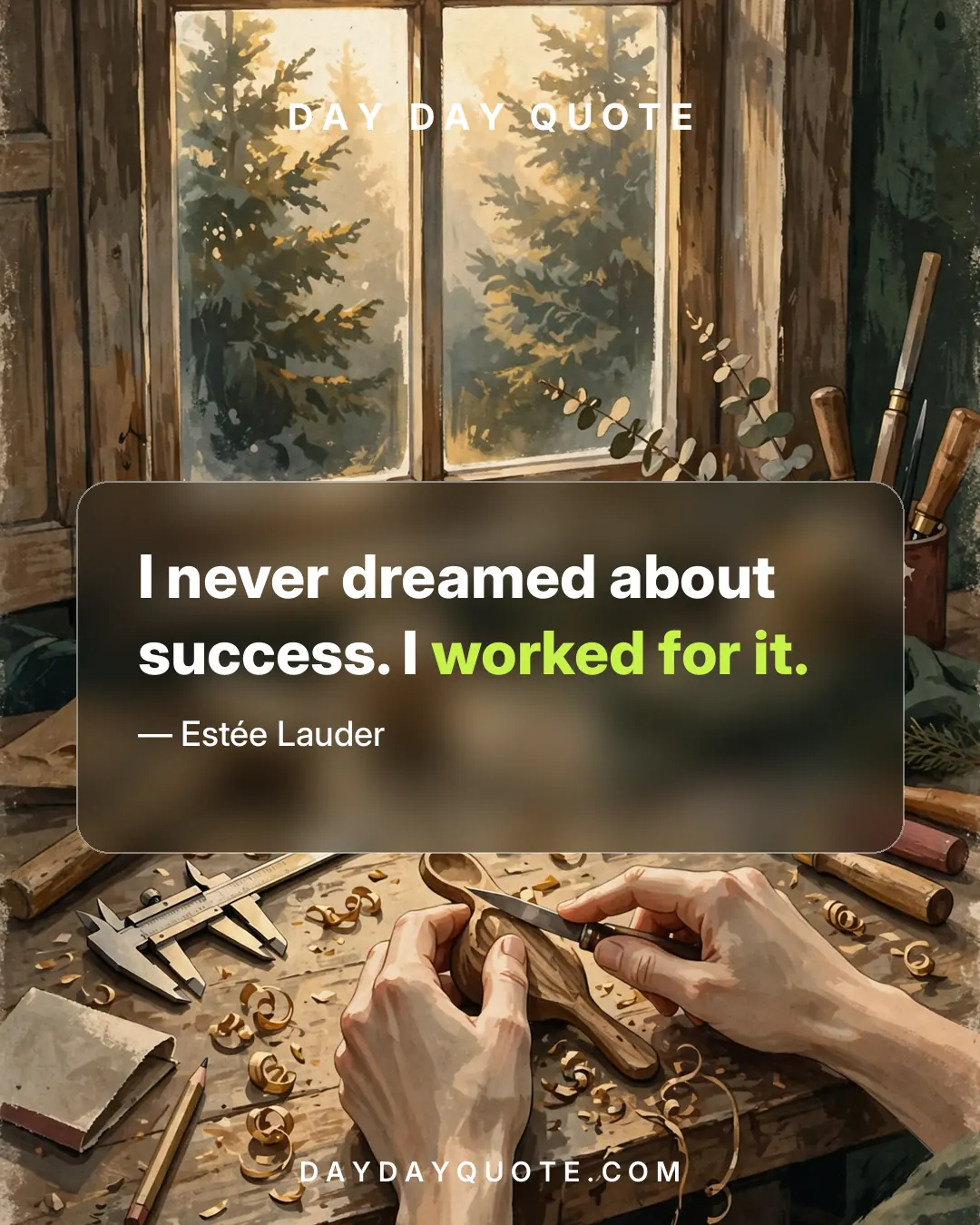
The line swaps a picture for a schedule. Success arrives as a byproduct of hours logged, not visions admired.
“Success usually comes to those who are too busy to be looking for it.”
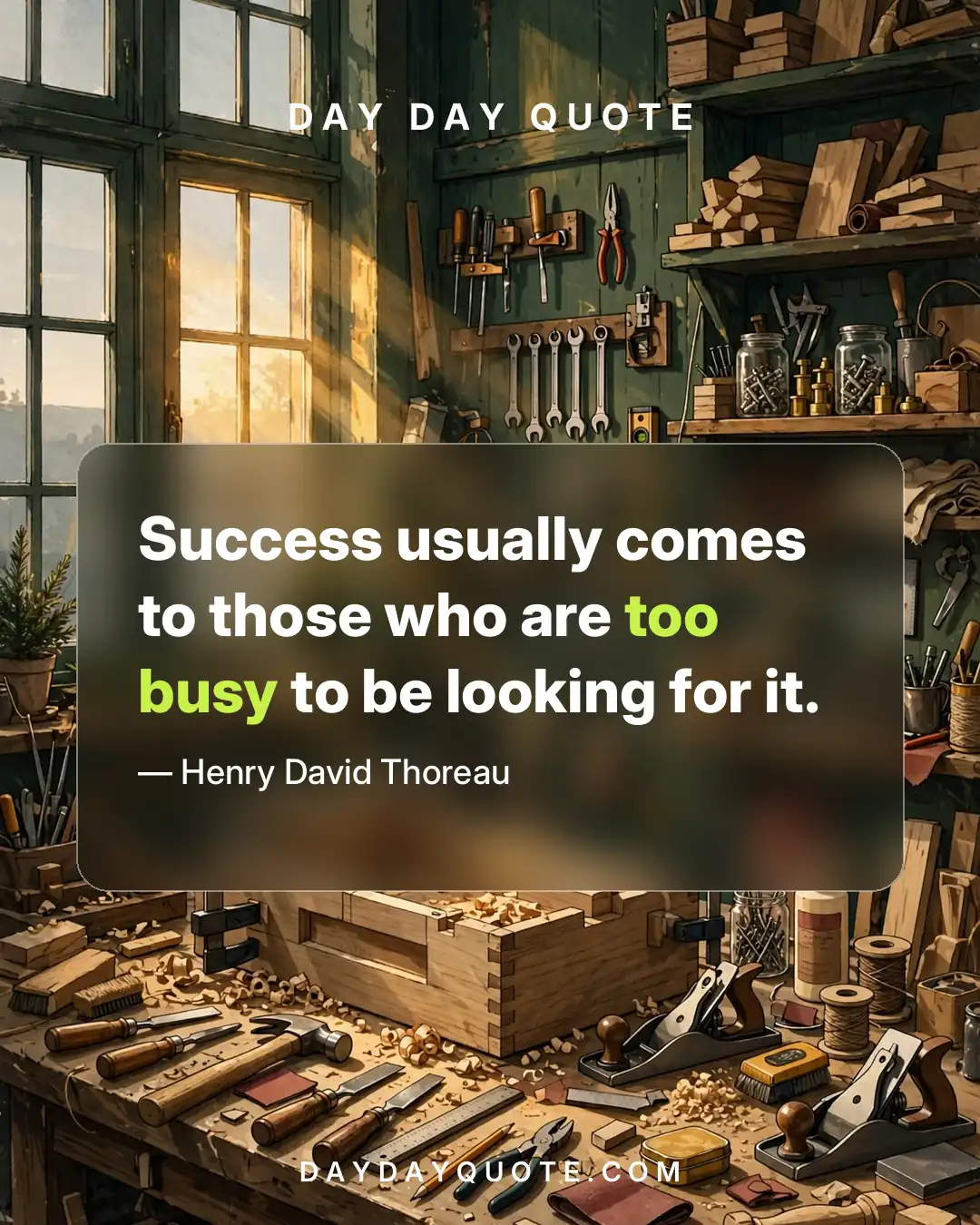
Scoreboard-watching is the tax this line removes. The work gets the hour; the result gets whatever is left.
Five more for the workday, as plain lines:
- “The only way to do great work is to love what you do.” — Attributed to Steve Jobs
- “I am a slow walker, but I never walk back.” — Abraham Lincoln
- “Well done is better than well said.” — Benjamin Franklin
- “What we achieve inwardly will change outer reality.” — Plutarch
- “Either you run the day or the day runs you.” — Jim Rohn
Motivational Quotes About Believing in Yourself
Belief, in the quotes that last, is rarely a feeling of confidence. It is a decision made before the evidence arrives. Henry Ford states it as a law of outcomes: “Whether you think you can or you think you can’t, you’re right.” The line is often read as optimism; it is stricter than that. It claims the belief sets the attempt count, and the attempt count sets the result, so the belief ends up correct in both directions. Eleanor Roosevelt aims the same idea at dreams: “The future belongs to those who believe in the beauty of their dreams.” Notice what both lines refuse to do. Neither promises the goal is realistic, near, or fairly priced. They speak only about the starting position of the person attempting it. That makes them usable on days when confidence is absent, because a starting position can be chosen in a way a feeling cannot. The practical move is small: before a hard task, state the working assumption out loud, in the Ford form, and let the day test it. People who repeat that habit are not deluding themselves; they are setting the one variable that quietly controls all the others, the number of serious attempts they will make.
“Whether you think you can or you think you can’t, you’re right.”
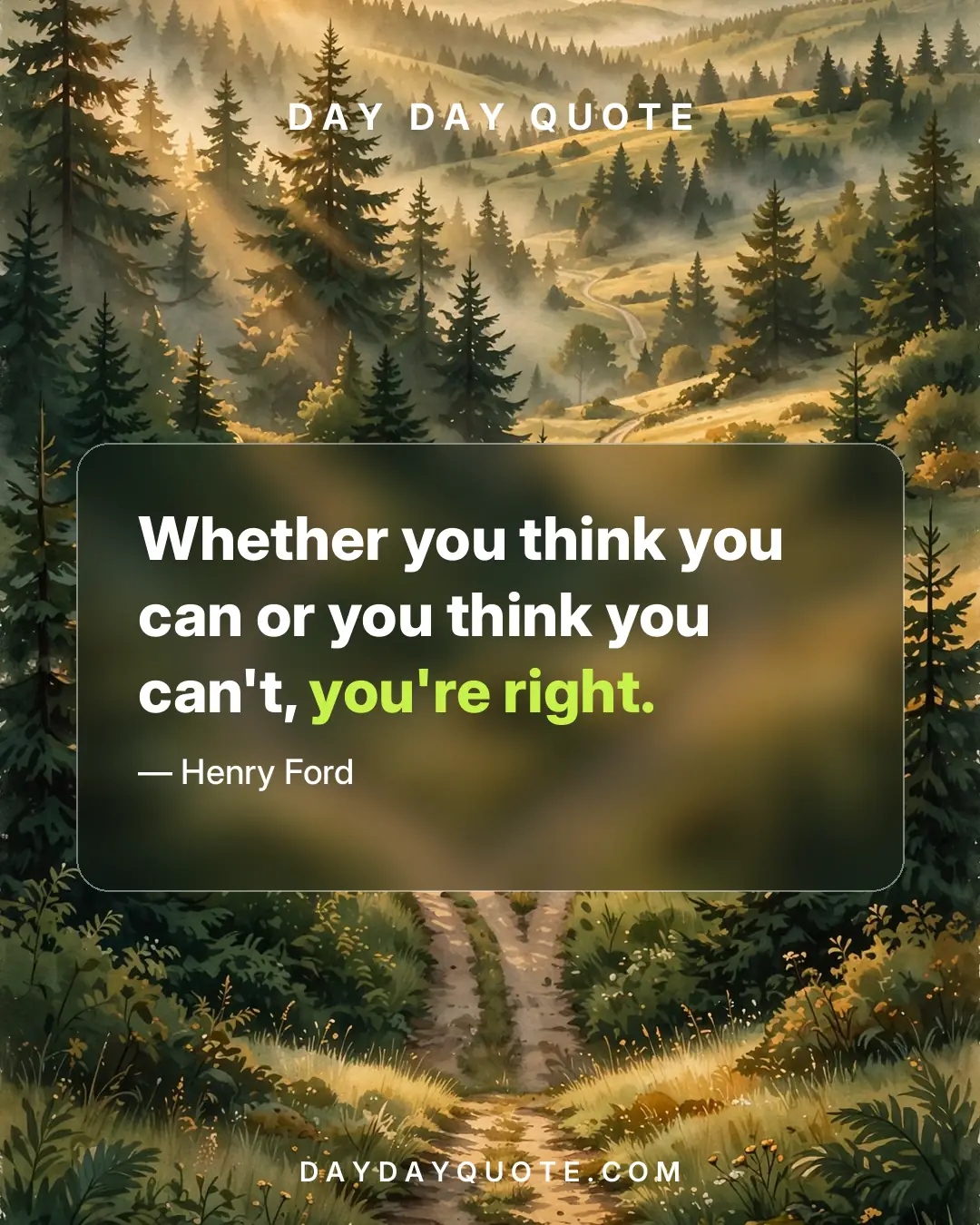
The belief is not a prediction. It is the setting that decides how many attempts the prediction gets.
“The future belongs to those who believe in the beauty of their dreams.”

Roosevelt ties the future to a present-tense verb. Believing is something done today, with today’s evidence.
Five more on self-belief:
- “No one can make you feel inferior without your consent.” — Attributed to Eleanor Roosevelt
- “It is never too late to be what you might have been.” — Attributed to George Eliot
- “A man is but the product of his thoughts. What he thinks, he becomes.” — Attributed to Mahatma Gandhi
- “To be yourself in a world that is constantly trying to make you something else is the greatest accomplishment.” — Ralph Waldo Emerson
- “You must do the things you think you cannot do.” — Attributed to Eleanor Roosevelt
Motivational Quotes for Hard Days
Hard days need shorter sentences. A person in the middle of a loss, a failure, or a frightening diagnosis does not need a philosophy; they need one line that fits inside the hour they are having. Franklin D. Roosevelt, who governed through a depression and a war, wrote the section’s rule: “The only limit to our realization of tomorrow is our doubts of today.” The line does not deny the difficulty of today. It denies today the right to set tomorrow’s ceiling. William James adds the behavioral half: “Act as if what you do makes a difference. It does.” On a hard day, action shrinks to the size of one phone call, one form, one walk around the block. James argues the size does not matter, because the difference a small act makes is in the person who did it, and that difference carries into the next act. If your hard day is specifically about wanting to quit, this site’s dedicated page of never give up quotes goes deeper, with 30 lines organized by situation. Start here with these two, and borrow the rest when the hour allows.
“The only limit to our realization of tomorrow is our doubts of today.”
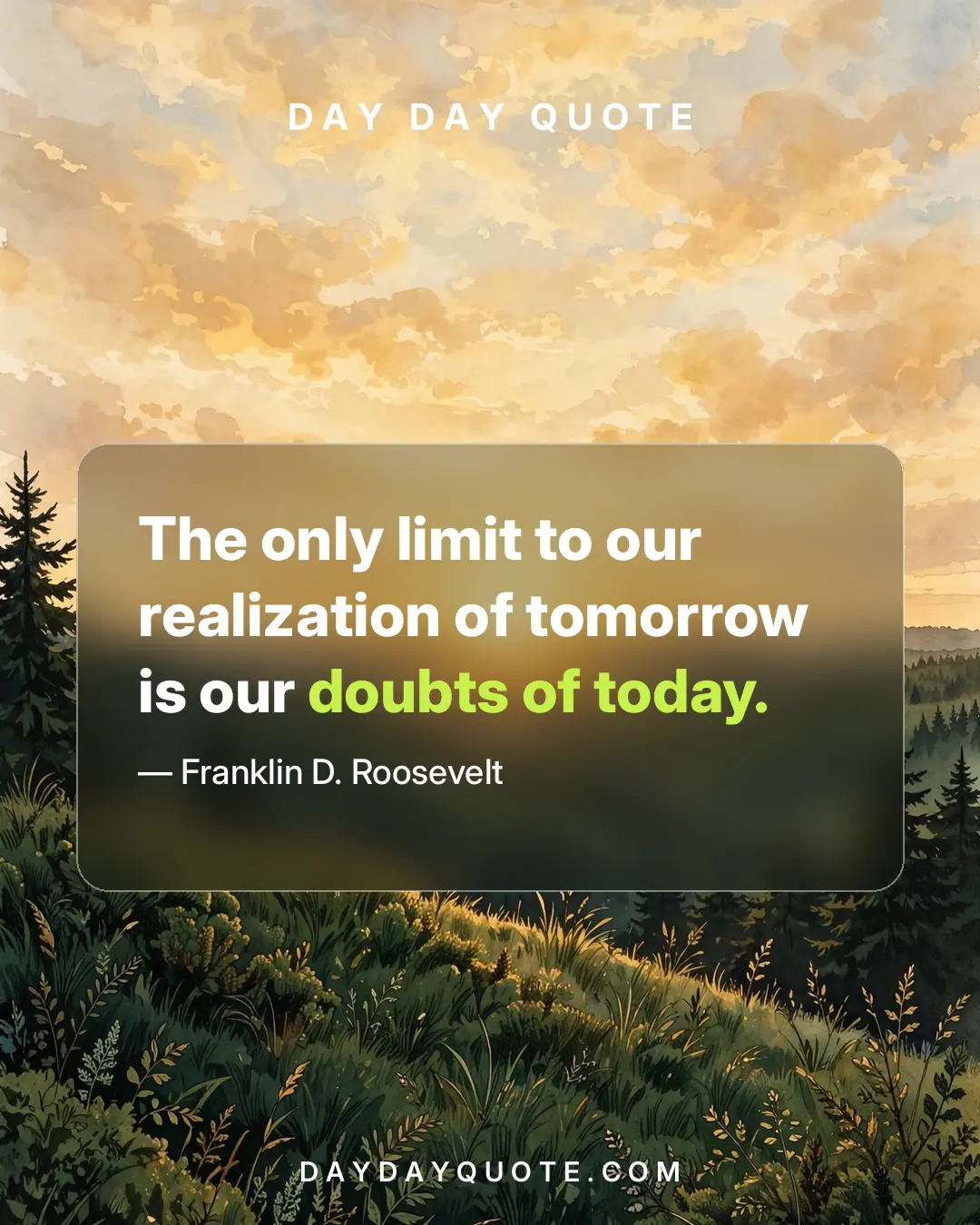
Doubt is treated as a present-tense cost, not a forecast. Pay it down today and tomorrow reprices itself.
“Act as if what you do makes a difference. It does.”
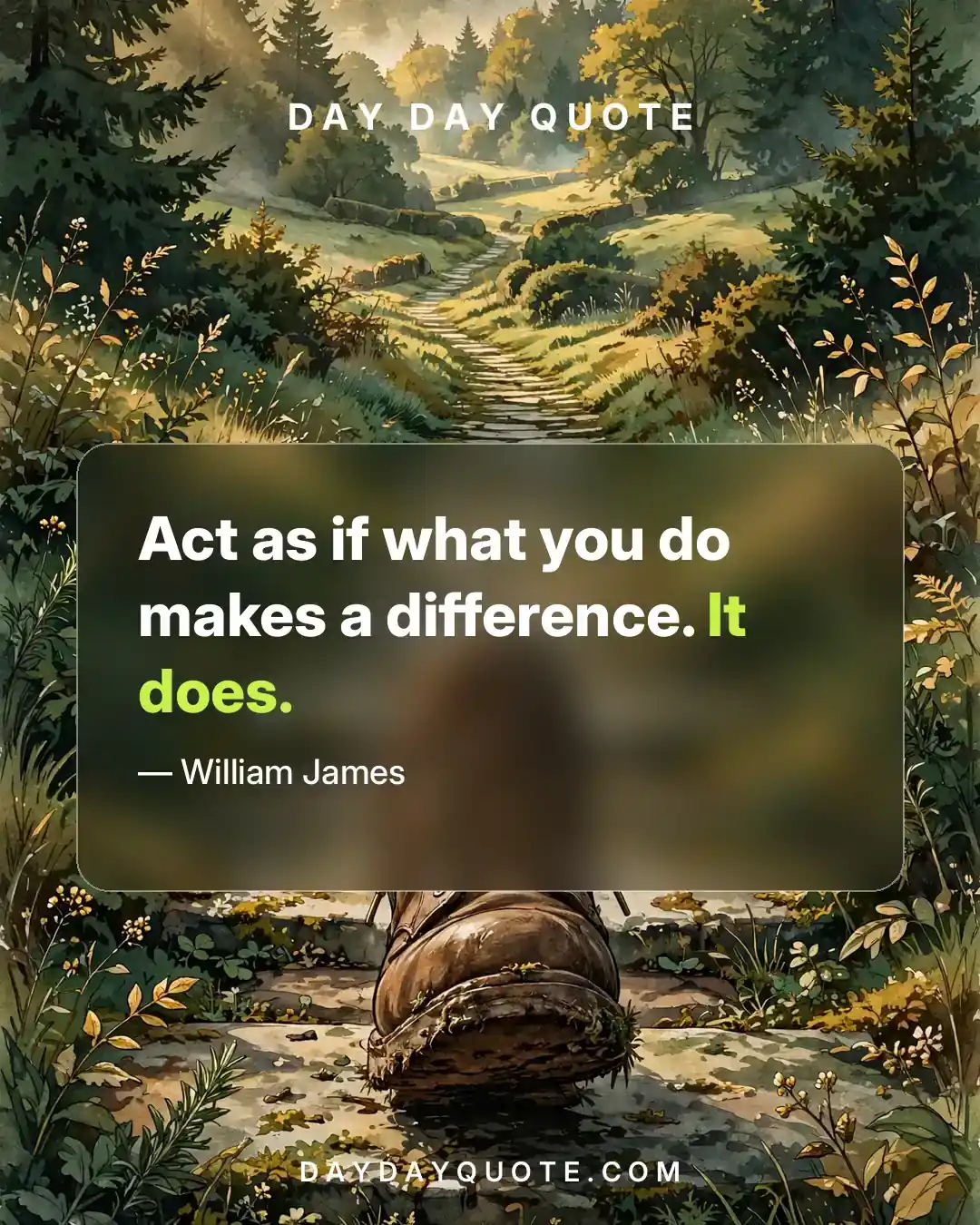
James gives the order before the evidence. Act first; the difference shows up in the person, then in the results.
Five more for the hard days:
- “In the middle of difficulty lies opportunity.” — Attributed to Albert Einstein
- “This too shall pass.” — Persian proverb
- “Rock bottom became the solid foundation on which I rebuilt my life.” — J.K. Rowling
- “Even the darkest night will end and the sun will rise.” — Victor Hugo
- “What lies behind us and what lies before us are tiny matters compared to what lies within us.” — Attributed to Ralph Waldo Emerson
Short Motivational Quotes
Short motivational quotes survive because they fit where life happens: a lock screen, a notebook margin, the first line of a message. Brevity also forces honesty. A six-word line cannot hide behind qualifications, so the short lines that last tend to give a direct order or a clean fact. “The secret of getting ahead is getting started,” attributed to Mark Twain, is the cleanest order in this whole page. It skips planning, talent, and timing, and charges the entire result to the first step. The Aristotle-attributed line works as the fact: “Quality is not an act, it is a habit.” A habit is the one motivational tool that does not depend on how a person feels in the morning, which is why coaches quote it at athletes and teachers quote it at students. Use this section the way it was built: copy one line, put it in the place you look first, and leave it there for thirty days. Rotation feels productive and is usually avoidance. A line read thirty times starts to argue back when you negotiate with yourself, and that argument, held at the right moment, is the entire value of a short quote.
“The secret of getting ahead is getting started.”
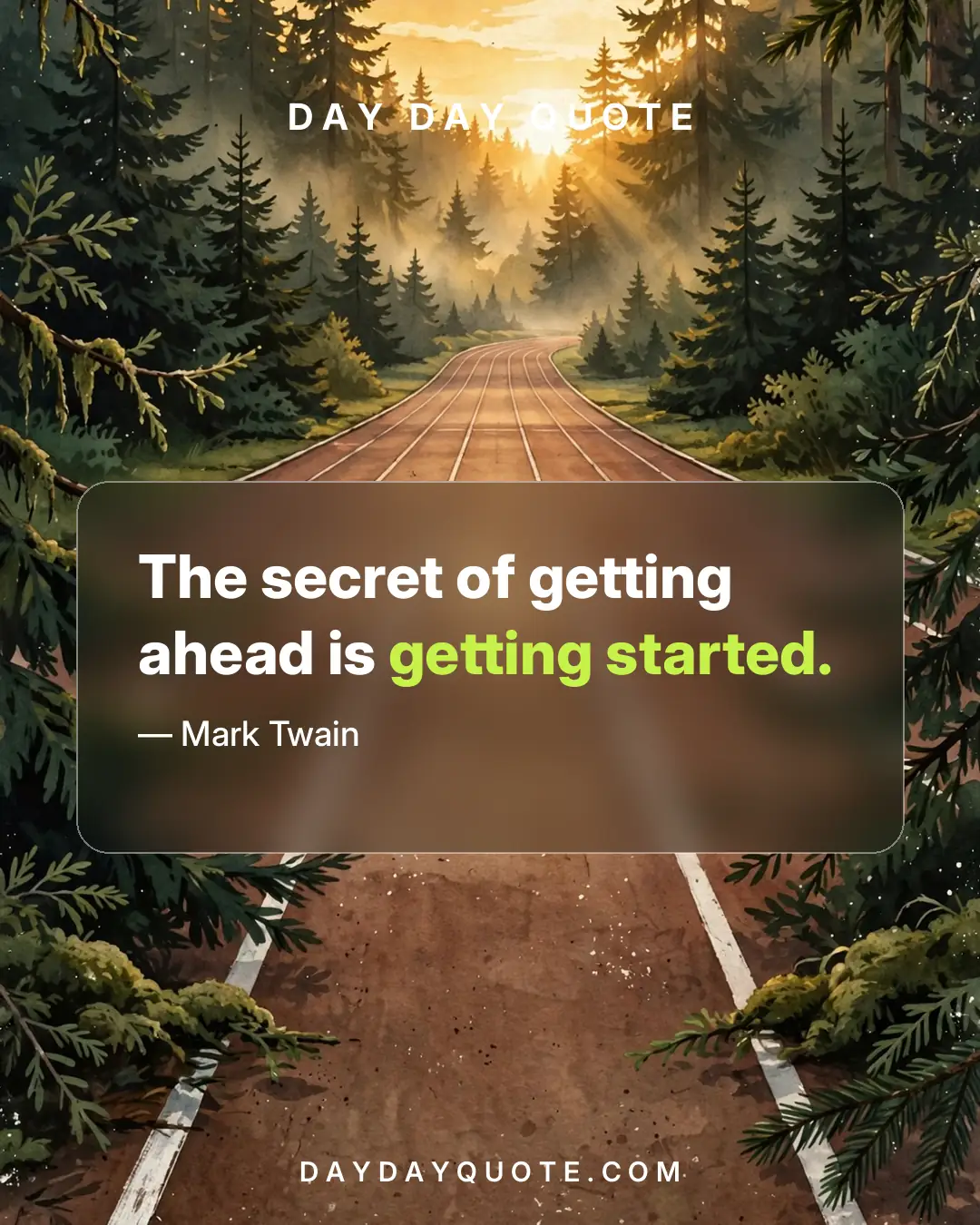
Every other secret in this page assumes this one already happened. Starting is the gate the rest stand behind.
“Quality is not an act, it is a habit.”
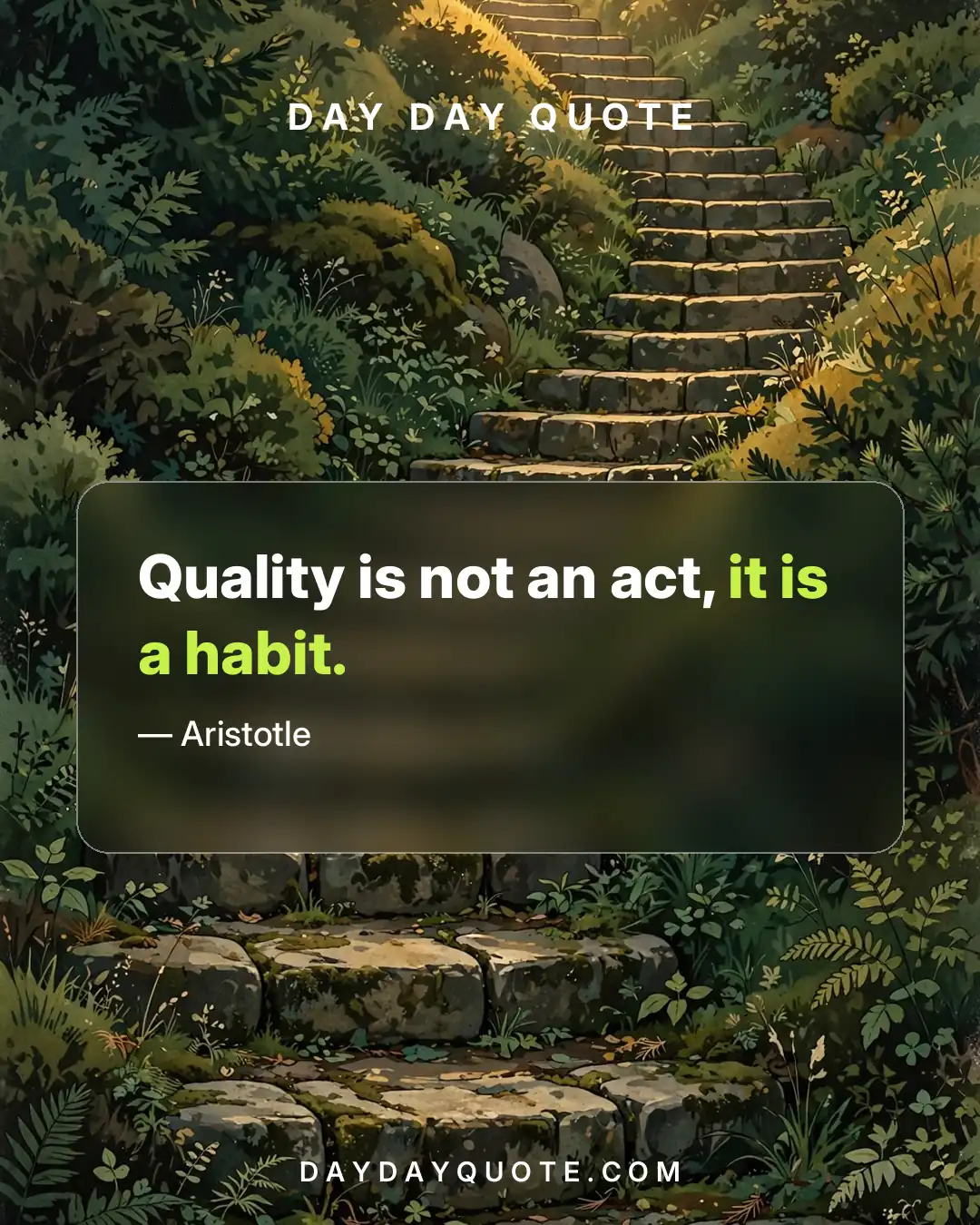
The line demotes talent and promotes Tuesday. What gets repeated gets believed, then gets done well.
Ten more short lines:
- “Well begun is half done.” — Aristotle
- “He who has a why to live can bear almost any how.” — Friedrich Nietzsche
- “Forever is composed of nows.” — Emily Dickinson
- “Turn your wounds into wisdom.” — Oprah Winfrey
- “Light tomorrow with today.” — Elizabeth Barrett Browning
- “No act of kindness, no matter how small, is ever wasted.” — Aesop
- “If opportunity doesn’t knock, build a door.” — Milton Berle
- “A year from now you may wish you had started today.” — Attributed to Karen Lamb
- “Make each day your masterpiece.” — John Wooden
- “Wherever you go, go with all your heart.” — Confucius
Motivational Quotes from Founders and Leaders
Advice from people who built things carries a specific weight, because their lines were priced by payrolls, deadlines, and public failures. Yeats, a poet rather than a founder, still wrote the builder’s rule: “Do not wait to strike till the iron is hot; but make it hot by striking.” The blacksmith image is exact. Heat, in a forge and in a career, is generated by the work itself, not delivered before it. Rockefeller’s line prices ambition honestly: “Don’t be afraid to give up the good to go for the great.” Most stalled projects are not bad projects; they are good ones defended past their season. The line gives permission to close a decent chapter on purpose, which is the decision founders describe most often and employees find hardest. Read this section when the question is not effort but direction. Effort questions belong to the work section above; direction questions are answered here, by people whose mistakes were expensive enough to make their conclusions careful.
“Do not wait to strike till the iron is hot; but make it hot by striking.”
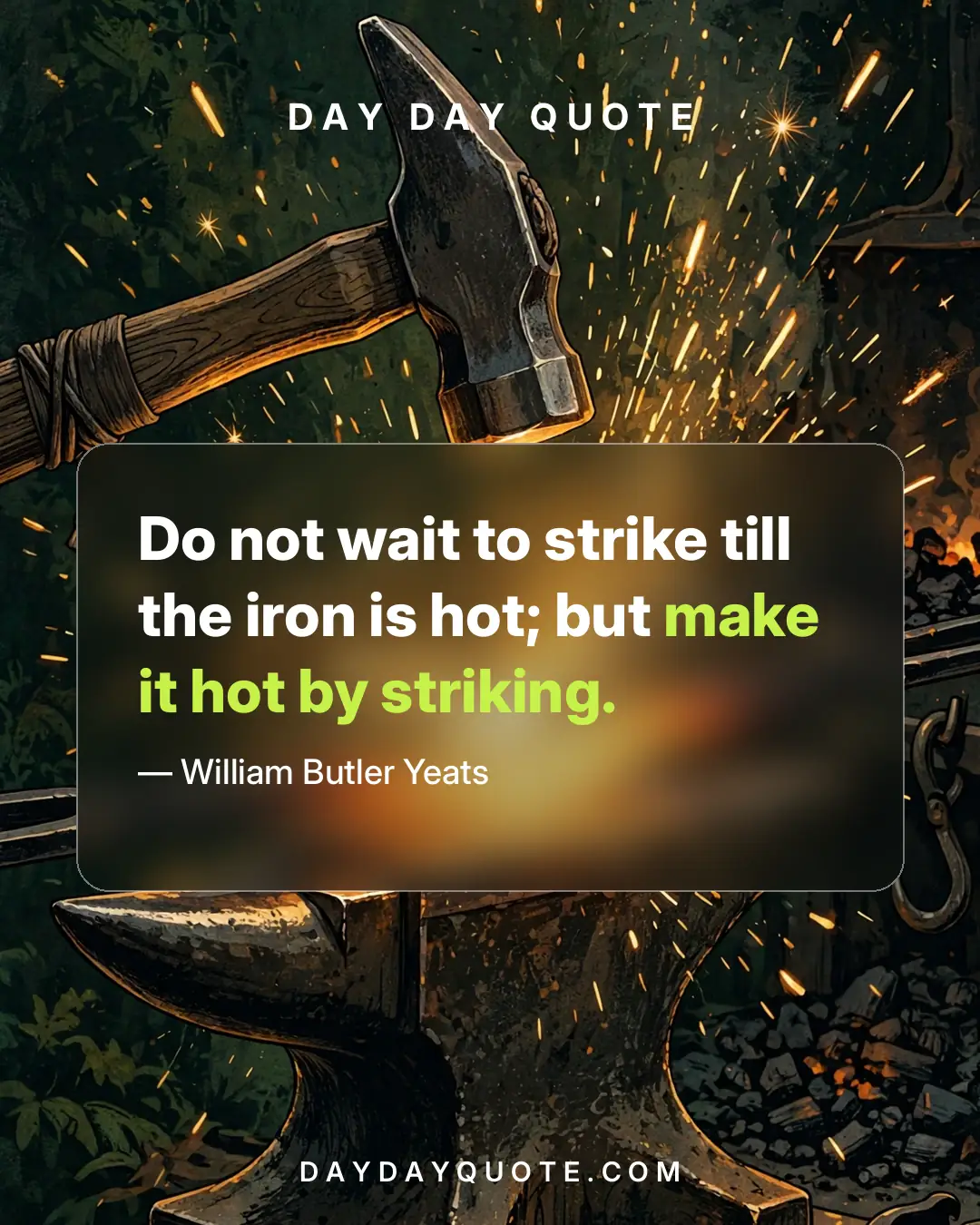
The forge rule for motivation: heat is a product of striking, so waiting for heat reverses the process.
“Don’t be afraid to give up the good to go for the great.”
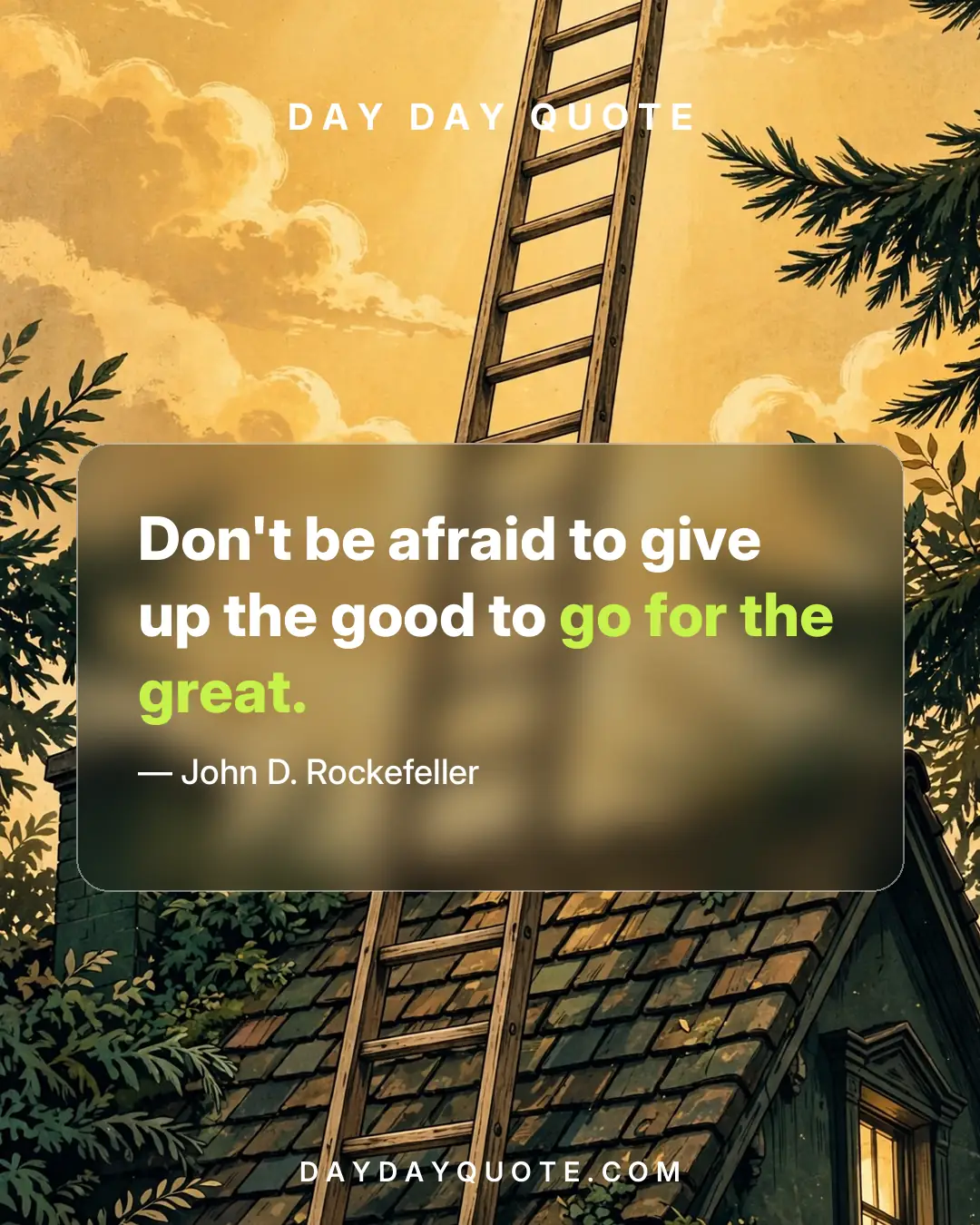
The enemy named here is not failure. It is a good result, defended past the season it belonged to.
Five more from builders and leaders:
- “Whether you think you can or you think you can’t, you’re right.” — Henry Ford (also carded above; leaders quote it because it scales from one worker to a whole company)
- “The best way to predict the future is to invent it.” — Attributed to Alan Kay
- “I never lose. Either I win or I learn.” — Attributed to Nelson Mandela
- “Chase the vision, not the money. The money will end up following you.” — Tony Hsieh
- “If you are not willing to risk the usual, you will have to settle for the ordinary.” — Jim Rohn
When to Use Which Quote
| Your situation | Reach for | Why it fits |
|---|---|---|
| Starting a project you keep postponing | Twain, getting started | It charges everything to the first step |
| A workday with no visible progress | Lauder, worked for it | It replaces the scoreboard with hours |
| A failure still fresh | Mandela, win or learn | It reclassifies the result as tuition |
| Doubting your own ability | Ford, think you can | It sets the attempt count deliberately |
| A good project past its season | Rockefeller, good to great | It gives permission to close the chapter |
| A hard day with no energy | James, act as if | The required act is small enough to do tired |
How to Use Motivational Quotes Without Wasting Them
A motivational quote is wasted when it is only read. The lines on this page work through three mechanisms, and each has a correct use. First, placement: a quote read at the decision point beats a quote read at leisure, so put the line where the decision happens, at the desk, the gym bag, the phone’s first screen. Second, singleness: one line held for a month outperforms thirty lines rotated daily, because repetition is what turns a sentence into a reflex. Third, pairing: a quote works best attached to a behavior small enough to survive a bad day, one call, one page, one lap. People who use quotes this way are not collecting inspiration; they are installing a reminder at the exact place their resolve usually fails. That is a modest claim, and it is the true one. A line of text will not change a life by being admired. Placed well, held long, and paired with one small act, it changes the next hour, and hours are the material lives are built from.
Two pages in this collection go deeper on a single skill each: discipline quotes cover daily follow-through when motivation fades, and confidence quotes cover the minutes before a hard attempt.
Motivational Quotes: Common Questions
What are the best motivational quotes? The lines readers keep returning to are Ford on belief (“Whether you think you can or you think you can’t, you’re right”), Twain on starting, and Lauder on working for success. The best quote for a given day is the one matched to that day’s problem.
What is a good motivational quote for work? “I never dreamed about success. I worked for it,” attributed to Estée Lauder, is the standard work quote because it replaces inspiration with hours. Thoreau’s line about success finding the busy works well as a desk reminder.
What is a short motivational quote for the morning? “Light tomorrow with today,” by Elizabeth Barrett Browning, and “Make each day your masterpiece,” by John Wooden, are both under six words and built for a first screen or a mirror.
Do motivational quotes actually help? They help in one narrow, real way: a line held in memory at a decision point can change the next action. They do not replace rest, money, skill, or help, and any page claiming more than that is overselling them.
How many motivational quotes should I save? Save one per situation, not one per mood. Most readers end up with four to six working lines: one for starting, one for failure, one for slow days, one for hard days, and one to send to other people.
Can I share these quotes? Yes. Every card on this page has share and copy buttons, and the lines themselves are public-domain or widely attributed sayings. Credit the author where the author is known, as this page does.
Start With One Line
This page gave you 40 motivational quotes; your week needs one of them. Pick the line that matches your current problem, save its card, and place it where tomorrow starts. When the season changes, come back and pick the next one. The collection will be here, and the work, as Lauder priced it, will be yours.