Never Give Up Quotes: 30 Lines for the Days You Want to Quit
The lines below earn a place on this page because each line gives a concrete reason to continue, not a slogan. Edison tested thousands of designs before his light bulb worked, and a remark attributed to Edison counts 10,000 ways that do not work. Failure at that scale stops reading as a verdict. This page groups 30 never give up quotes by situation, adds a short note under the five strongest lines, and ends with lines to send a friend.
Never Give Up Quotes by Situation
Never give up quotes for work matter most on the days a goal stops returning effort. A product launch stalls, a client goes quiet, or a promotion passes to someone else, and the work already done starts to look wasted. The five lines in this section treat that moment as a normal stage of a long project, not as a verdict on the person doing it. Edison tested thousands of materials before the practical light bulb worked. Ford lost companies before the assembly line made his name. Lombardi coached losing seasons before the championships that made his name. The pattern is consistent: the result arrived after the attempt count rose, not before it. Reading one line before a workday will not finish a project. It can still change what the day contains, because a person who reads ‘try just one more time’ makes one more call, sends one more draft, or books one more meeting. Small units of work stay doable in bad weeks, and bad weeks are when most goals are abandoned. Pick the line that matches your current block, save it where you will see it at 9 a.m., and let the attempt count do the rest.
| Situation | Line to read | Author |
|---|---|---|
| A distant goal | “It does not matter how slowly you go as long as you do not stop.” | Confucius |
| A plan just failed | “Failure is only the opportunity to begin again, this time more intelligently.” | Henry Ford |
| Another fall | “Fall seven times, stand up eight.” | Japanese proverb |
| Defeat landed today | “Never give up, for that is just the place and time that the tide will turn.” | Harriet Beecher Stowe |
| Energy gone, hope intact | “By perseverance the snail reached the ark.” | Charles Spurgeon |
Never Give Up Quotes About Failure That Point Forward
Never give up quotes about failure share one claim: a failed attempt is information, not an identity. Beckett’s ‘Fail better’ is the shortest version of the claim, and it is also the most demanding, because it asks for a second attempt that uses what the first attempt taught. A failed exam shows which topics were weak. A failed business shows which costs were real. A failed audition shows what the panel rewarded instead. The information only becomes useful when the next attempt changes something based on it. That is why this section pairs every line with the change it suggests. Read the failure lines slowly, and write down the single adjustment each one points to before you try again. People who repeat the same attempt unchanged usually collect the same result. People who adjust one variable at a time eventually own a method, and a method survives bad luck better than motivation does. Churchill’s line about success and failure makes the same point at life scale: neither state is final, so neither one gets to end the story.
“Our greatest weakness lies in giving up. The most certain way to succeed is always to try just one more time.”
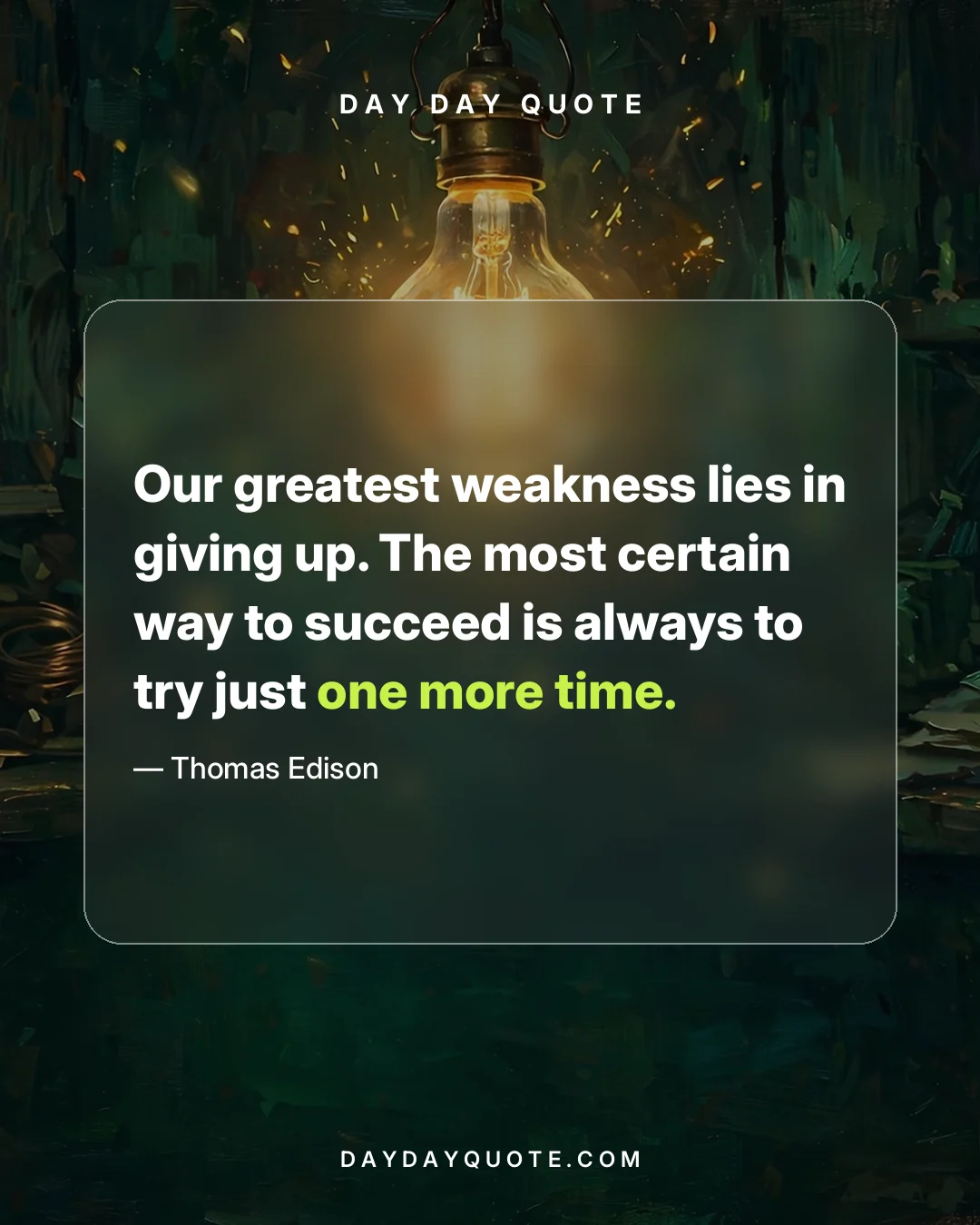
Edison points at the next attempt, not the last result. One more try is a small unit, and small units stay doable in bad weeks.
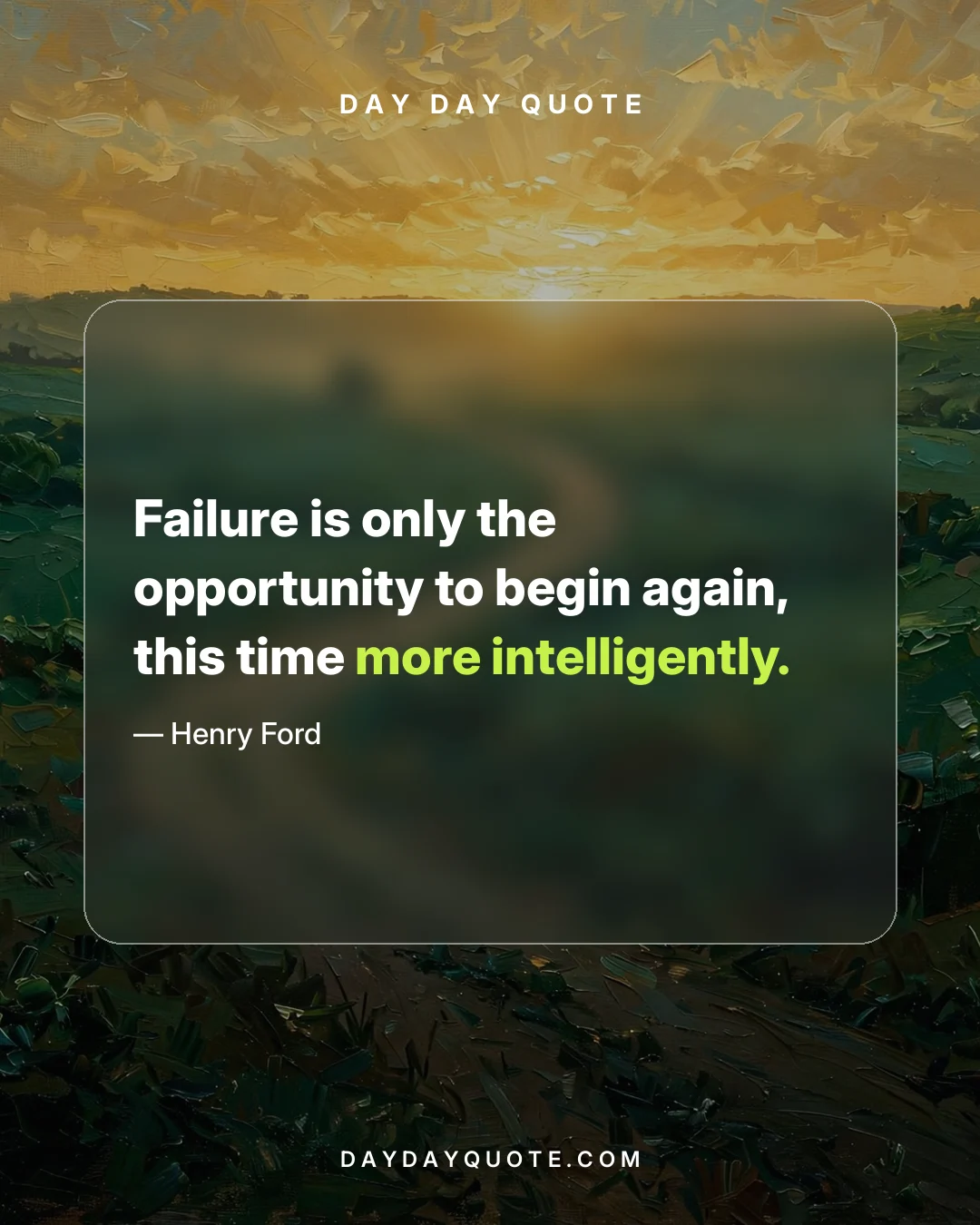
“Failure is only the opportunity to begin again, this time more intelligently.”
“Ever tried. Ever failed. No matter. Try again. Fail again. Fail better.”
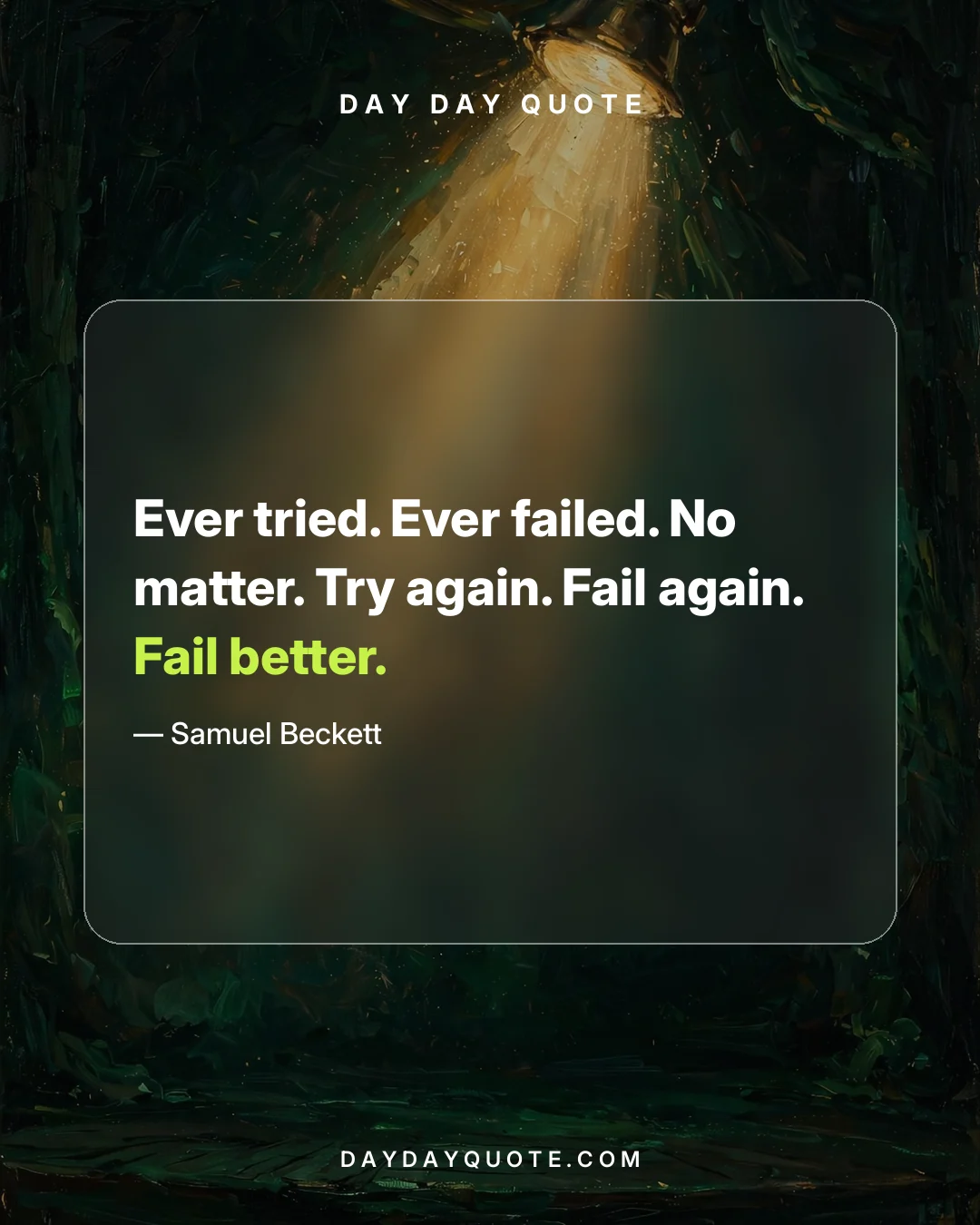
Beckett printed the line in Worstward Ho (1983). The sentence grants permission to improve the failure itself.
“Success is not final, failure is not fatal: it is the courage to continue that counts.”
“Never give in, never, never, never, never.”
Never Give Up Quotes About Slow Progress and Patience
Slow progress tests a different muscle than failure does. Failure is loud and brief; slow progress is quiet and long, and it convinces capable people that nothing is happening. The lines in this section answer that feeling with arithmetic. Confucius moves a mountain one small stone at a time, and the stones are the point: a pace that looks unimpressive in a week becomes undeniable in a year. Franklin treats patience as a form of control, the ability to hold an aim steady while time does its share of the work. Read these lines on the days the graph barely moves. A language learned ten minutes a day, a debt paid in small fixed amounts, a body trained three mornings a week: all three look static from inside any single week and transformed from the end of the year. The section is placed in the middle of this page for a reason. Most readers do not quit at the dramatic moment; they quit during the long, flat middle, where the only evidence of progress is the count of days they did not stop.
“It does not matter how slowly you go as long as you do not stop.”
Read the line when progress feels invisible. A pace held for 30 days beats a sprint abandoned on day four.
“The man who moves a mountain begins by carrying away small stones.” (Attributed to Confucius)
“By perseverance the snail reached the ark.” (Charles Spurgeon)
“Fall seven times, stand up eight.”
“Never give up on a dream just because of the time it will take to accomplish it. The time will pass anyway.” (Earl Nightingale)
“Success is the sum of small efforts, repeated day in and day out.” (Robert Collier)
Never Give Up Quotes for the Exact Moment You Want to Quit
Short never give up quotes earn their place through use, not length. A six-word line fits on a phone lock screen, inside a notebook margin, and at the top of a message to a friend who is having a bad week. Long advice gets postponed; a short line gets read today. The lines in this section were chosen because each one gives an order a tired person can obey in under a minute. Stand up eight. Go slowly, do not stop. One more time. Each verb is concrete, and concrete verbs are what separate a usable line from a pleasant one. Short lines also travel well. They are the quotes readers copy into captions, status updates, and cards, which is why every line here keeps its author’s name attached where the author is known. If you are choosing one line for a hard season rather than a hard day, pick the slowest one: the Confucius line about moving slowly without stopping describes a pace a person can hold for months, and months are the unit in which most recoveries and most careers are actually measured.
“Never give up, for that is just the place and time that the tide will turn.”
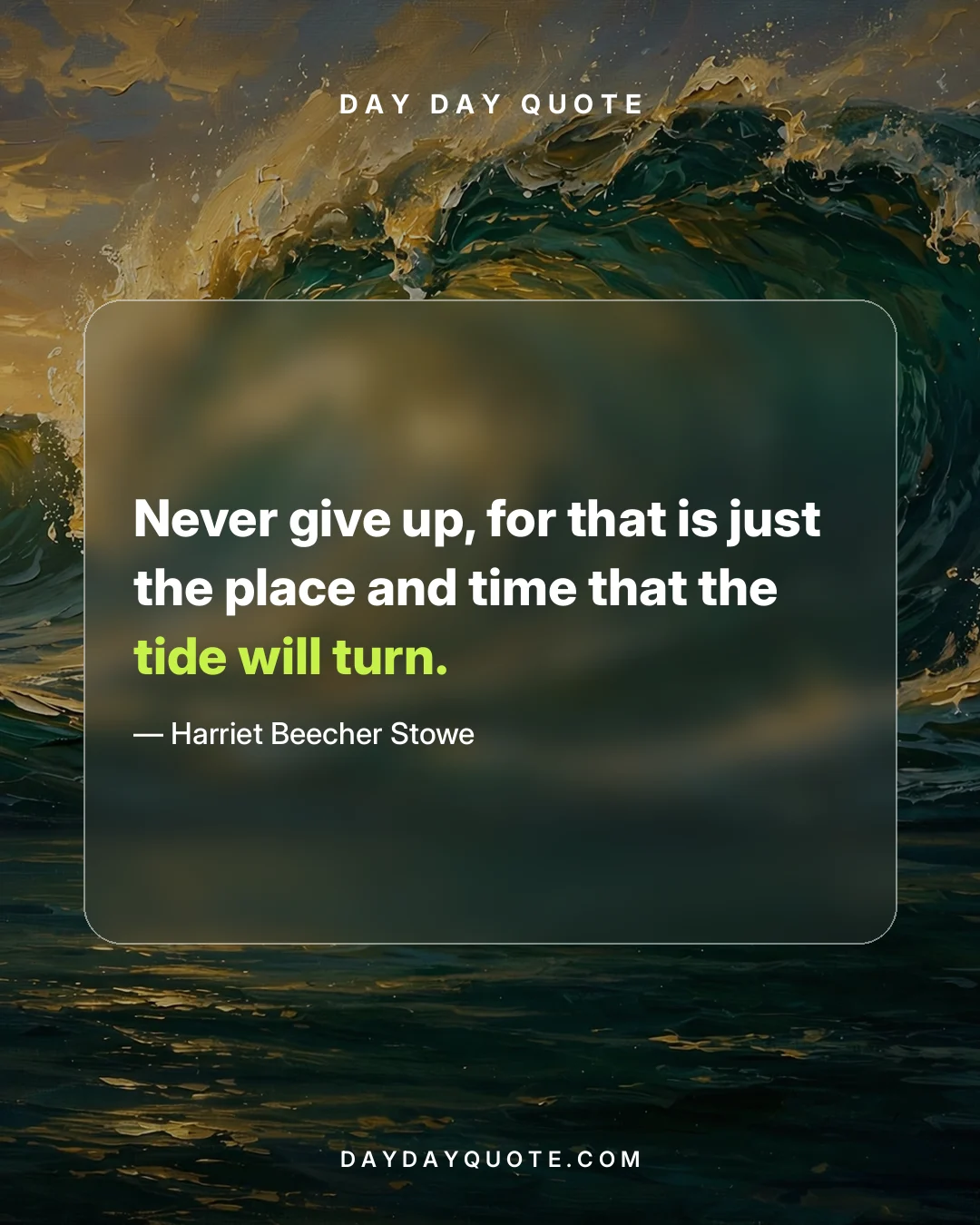
Tides make the argument physical: water at its lowest point has already started to return.
“It’s hard to beat a person who never gives up.” (Babe Ruth)
“Winners never quit, and quitters never win.”
“You may encounter many defeats, but you must not be defeated.” (Maya Angelou)
“Courage doesn’t always roar. Sometimes courage is the quiet voice at the end of the day saying, ‘I will try again tomorrow.’”
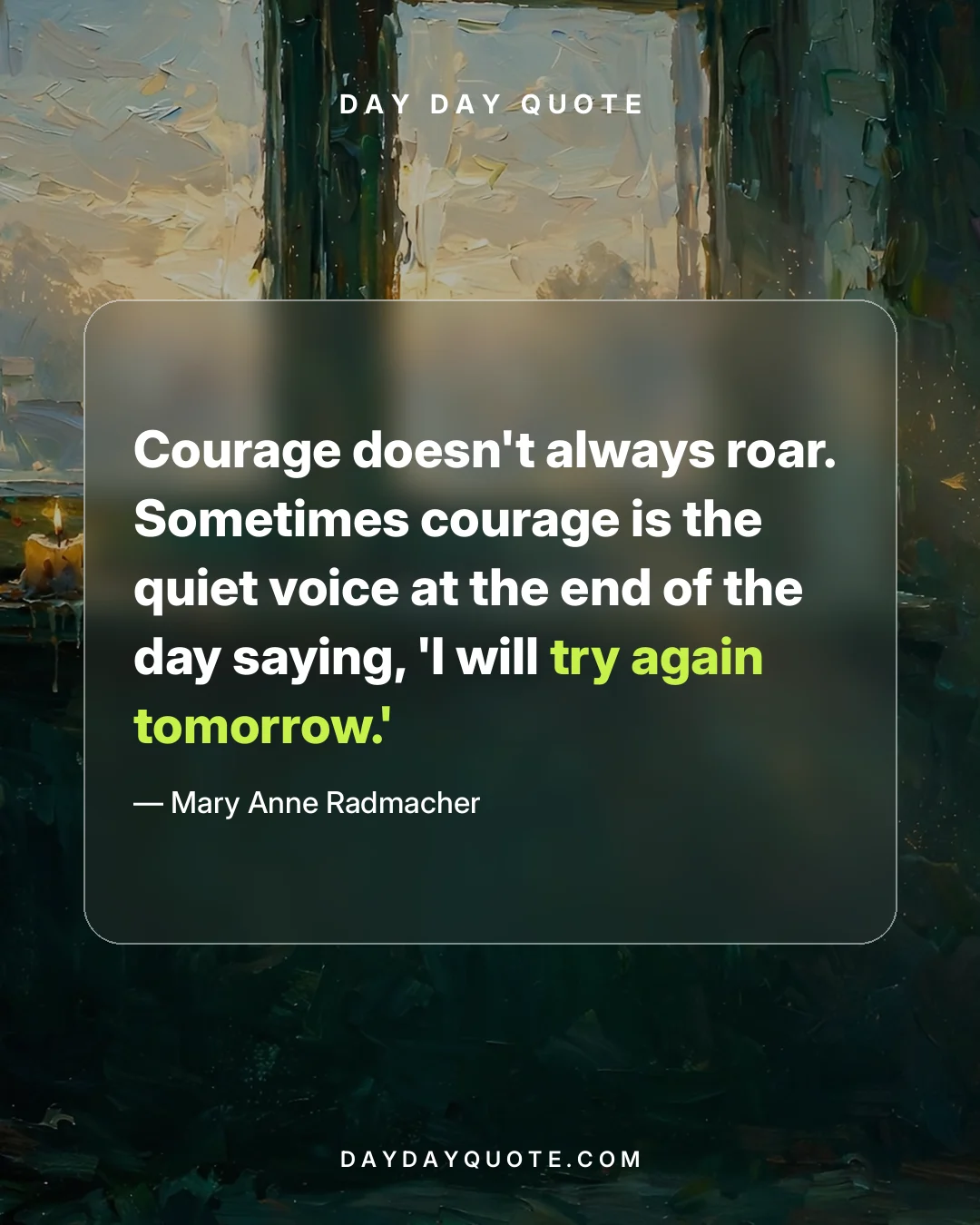
Radmacher sets courage at room volume. A quiet promise at night counts when roaring costs too much.
More Never Give Up Quotes That Refuse to End the Story
The ten lines in this section extend the same argument into patience, time, and defeat. Franklin appears twice because his writing treats persistence as a daily practice rather than a mood. Johnson credits duration over strength. Fitzgerald separates one defeat from a final one. Each line below also carries a matched image, because a quote a reader can picture is a quote a reader keeps. The section is ordered from rising after a fall to refusing a final defeat, which is the order hard seasons usually take: the fall happens first, the patience is needed in the middle, and the verdict gets refused at the end. If you read only three, read the Confucius line for the fall, the Franklin patience line for the middle, and the Fitzgerald line for the verdict. Together they cover the whole arc in under sixty words. Save the card images from this section for the days the words alone feel thin; an image holds attention a few seconds longer, and a few seconds is sometimes the entire difference between quitting at noon and continuing at one.
“Our greatest glory is not in never falling, but in rising every time we fall.”
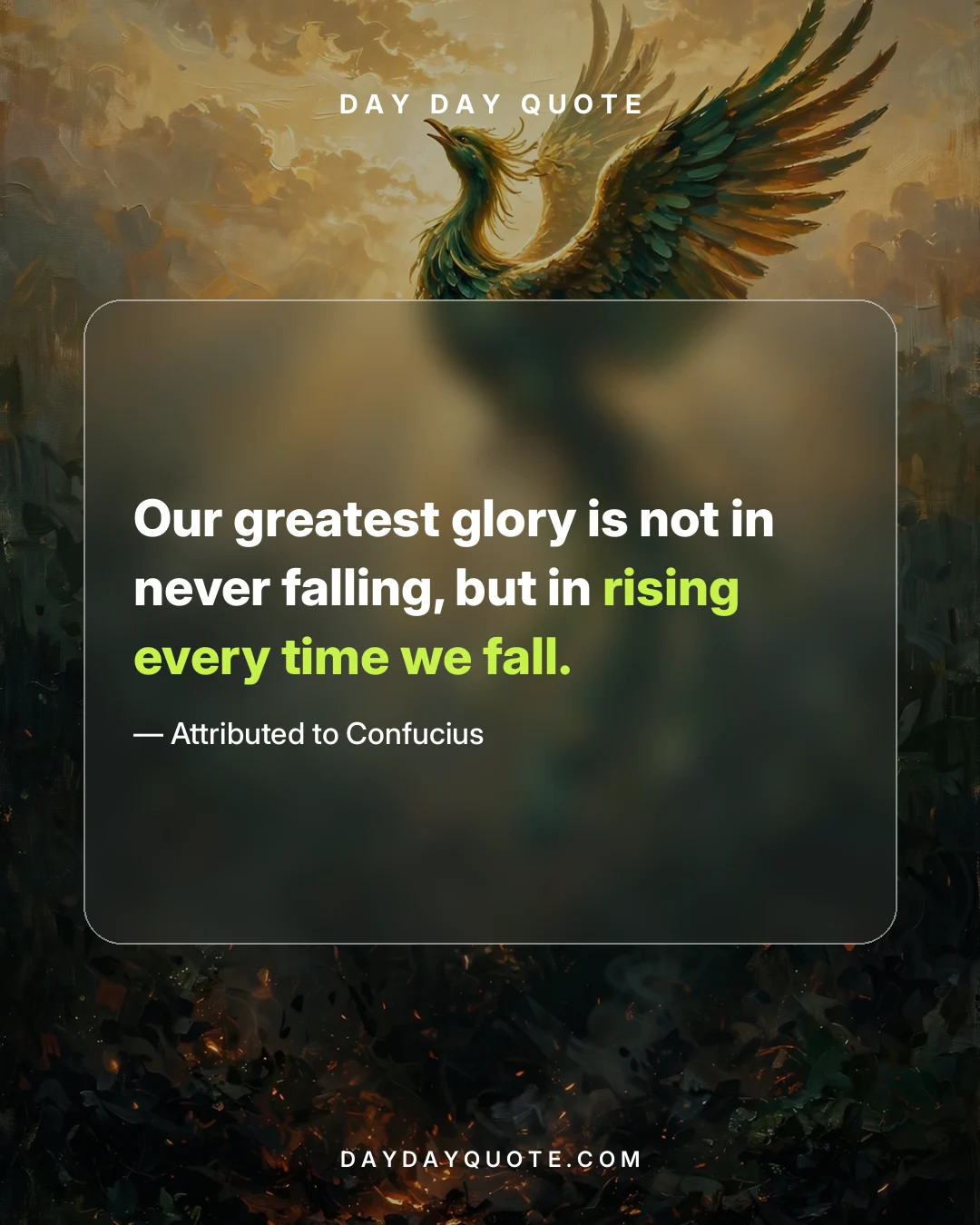
The line separates falling from failing: the fall is an event, the rise is a decision.
“It always seems impossible until it’s done.”
Most impossible verdicts are early reports; the finished work reads differently.
“Perseverance is not a long race; it is many short races one after the other.”
A long race invites one collapse; short races ask only for the next start.
“He that can have patience can have what he will.”
Patience here is not passive: it is holding the aim steady while time does its part.
“Don’t watch the clock; do what it does. Keep going.”
The clock never pauses to judge its pace; it simply keeps moving, and the line borrows that discipline.
“Energy and persistence conquer all things.”
Franklin pairs energy with persistence on purpose: effort starts the work, persistence finishes it.
“Great works are performed not by strength but by perseverance.”
Johnson moves the credit from force to duration: the work is great because it was continued.
“A little more persistence, a little more effort, and what seemed hopeless failure may turn to glorious success.”
The distance between failure and success is sometimes one more attempt, and Hubbard prices it exactly that small.
“Through perseverance many people win success out of what seemed destined to be certain failure.”
The sentence is built like the process: success appears in the middle of the clause, not at the start.
“Never confuse a single defeat with a final defeat.”
One defeat is data about a day; a final defeat is a verdict about a life. The line keeps the two apart.
Never Give Up Quotes to Send Someone Who Wants to Quit
Never give up quotes for someone you love work differently from quotes you keep for yourself. A line you send tells the person two things at once: the words themselves, and the fact that you noticed their week and chose to act. The sending is half the message. Keep the line short, name the person’s actual situation in your own sentence around it, and avoid sending five quotes where one chosen line would land harder. The quotes in this section were picked for sending. Radmacher’s quiet-voice line suits grief and slow recovery. Stowe’s tide line suits someone waiting for a result they cannot control. The Japanese proverb suits a person who has already fallen more than once and expects to be judged for it. Timing matters as much as wording. Send the line when the person has space to read it, not in the middle of the crisis hour, and follow it with one practical offer: a call, a meal, a lift, an hour of help. A quote opens the door; the offer is what walks through it.
- “I can accept failure, everyone fails at something. But I can’t accept not trying.” (Michael Jordan) Send the line to a friend cut from a team or passed over at work; Jordan counted more than 9,000 missed shots, by his own tally.
- “Tough times never last, but tough people do.” (Robert H. Schuller) Send the line to a parent or partner carrying a brutal month; Schuller printed the line as a book title in 1984.
- “Fall seven times, stand up eight.” (Japanese proverb) For anyone restarting after a fall: seven words, no lecture attached.
Never Give Up Quotes: Frequently Asked Questions
What is the most famous never give up quote? “Fall seven times, stand up eight.” The Japanese proverb leads most lists because the math stays honest: one more rise than the falls.
Did Winston Churchill say “Never, never, never give up”? No. Churchill said “never give in” at Harrow School on October 29, 1941. The shorter wording spread later as a paraphrase.
Which never give up quote suits a student before an exam? Confucius suits the night before a test: “It does not matter how slowly you go as long as you do not stop.” Slow review counts as review.
What should I text a friend who wants to quit? Send Radmacher’s quiet-voice line, then add a concrete offer: coffee Thursday, a ride to the interview, an hour of help with the application.
Can I post these quotes on social media? Yes. Short attributed quotations are standard for quote posts, and proverbs carry no author claim. Keep the credit line attached to every quote.
Why do people save never give up quotes on phones? A saved line works like a note from a calmer hour. One sentence read daily moves from the screen into recall within a week.
Conclusion
One lock-screen line, read every morning for 7 days, outlasts a saved folder of 100 quotes nobody opens. Print dates for the lines above run from Stowe’s 1800s prose to Worstward Ho (Beckett, 1983).
Keep reading: Motivation & Success Quotes · Healing Quotes · Day Day Quote home
Why Never Give Up Quotes Work on Hard Days
Never give up quotes work because they shorten the distance a hard day asks a person to cross. A reader who cannot plan a year can still read one line, stand up once, and send one message. The line does not solve the problem; it sizes the next step down to something a tired person can actually do.
The strongest lines on this page share one habit: they name a specific action. Try one more time. Carry away small stones. Fail better. Each verb is small enough to finish today, which is why these never give up quotes are saved and shared more than general advice about hope.
Writers return to these lines because the record behind them is long. Edison tested thousands of materials, Churchill spoke in 1941 with the war undecided, and the Japanese proverb about falling seven times predates them both. The words lasted because the situations they describe keep returning.